
Obagi Retinol 0.5% Anti-Ageing Cream Review
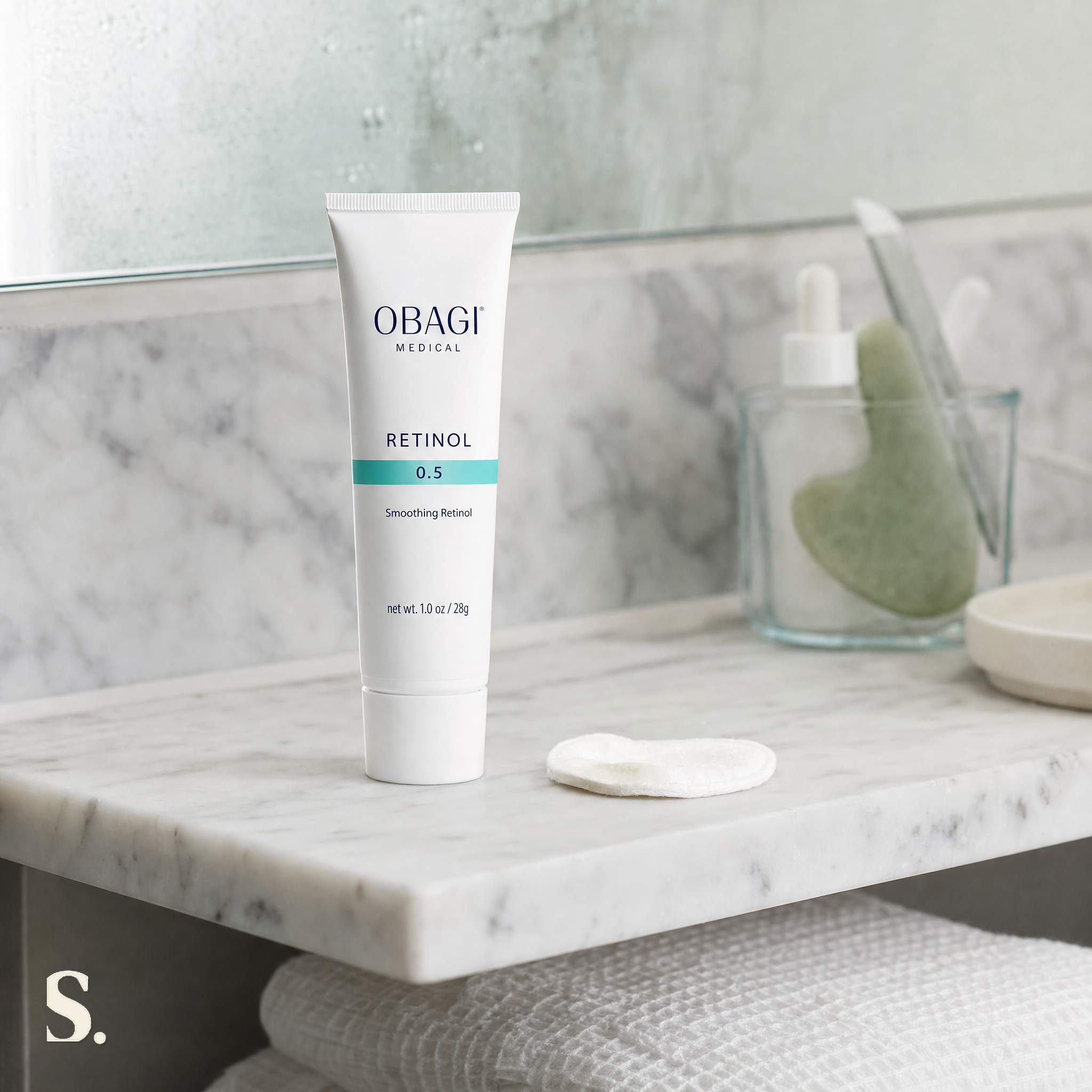
The Verdict
Obagi Retinol 0.5% is a sensible first retinol: a genuine entry-strength cream, not a diluted version of something you'll outgrow in a fortnight, with a soothing ingredient list built around it. It suits anyone who hasn't used a retinoid before, or who has reacted to retinol elsewhere and wants a gentler route back in. If you're already retinol-tolerant, this one will likely feel too light to do much for you — that's what Retinol 1.0 is for.

Obagi Retinol 0.5% Anti-Ageing Cream is Obagi's beginner-strength standalone retinol, built around an entrapped-release delivery system designed to introduce vitamin A into a routine with minimal irritation. It's a PM-only cream aimed at people who haven't used a retinoid before, or who've found other retinol products too harsh, and it's formulated with a soothing supporting cast of Calendula, Chamomile and Sodium Hyaluronate rather than left to work alone.
What is Obagi Retinol 0.5%?
This is a 28ml cream-based retinol, dispensed from an airless pump to help protect the formula from oxidation between uses. Obagi uses an entrapped retinol technology here, which is intended to release the active gradually rather than all at once, with the aim of reducing the redness and flaking that a first retinol often brings. It sits at the lower end of Obagi's two standalone retinol strengths — Retinol 0.5% and Retinol 1.0 — and is the one Obagi positions as the starting point.
Worth flagging for anyone comparing product data directly: Obagi's own catalogue lists this item under the product type "Targeted Serum" despite the format being a cream, which is a labelling quirk rather than a change in what's actually in the pump.
| Attribute | Detail |
|---|---|
| Format | Cream, airless pump |
| Size | 28ml |
| Core active | Entrapped-release retinol |
| Positioning | Beginner strength — the lower of Obagi's two standalone retinol creams |
| Time of use | PM only |
| Suits | Normal, oily, dry, combination skin; sensitive-leaning or retinol-naive skin |
Key ingredients
- Retinol (entrapped-release form) — the core active, supporting skin's natural renewal process and helping improve the appearance of fine lines, uneven texture and discolouration with consistent use
- Calendula — a soothing botanical extract included to help offset some of the sensitivity that can come with introducing a retinoid
- Chamomile — another calming botanical in the same supporting role
- Dipotassium Glycyrrhizate (Licorice Extract) — included for its soothing, comfort-focused properties
- Shea Butter — adds a nourishing, cushioning feel to the cream base
- Sodium Hyaluronate — a hydrating humectant, included to help support skin comfort while retinol does its work
The pattern across the ingredient list is worth noticing: rather than pairing retinol with more actives, Obagi has built this particular formula around comfort and hydration. That's consistent with its positioning as the gentler of the two standalone strengths, rather than the most feature-packed.
What it feels like to use
The cream itself is lightweight rather than heavy or occlusive, and the airless pump is designed to dispense a small, pearl-sized amount per application — more isn't better with retinol, and a little tends to go further than expected. Obagi describes the formula as absorbing without a greasy or heavy residue, which fits the cream-serum-hybrid texture; the Shea Butter and Sodium Hyaluronate in the base are there to keep the application comfortable while the retinol does the work underneath.
Who it's for
- Anyone who has never used a retinol, retinoid or prescription vitamin A cream before
- Sensitive-leaning or reactive skin that's struggled with stronger retinol products previously
- Anyone reintroducing retinol into their routine after a break
- Normal, oily, dry and combination skin types, per Obagi's own suitability guidance
- Those wanting to build tolerance gradually before considering a step up in strength
It's a less obvious fit for skin that's already comfortable with a nightly retinol elsewhere — in that case, the gentler delivery here is likely to feel like a step backwards rather than forwards, and Retinol 1.0 is the more appropriate strength to consider instead.
How to use it
Retinol is a PM-only step, applied to cleansed, dry skin before moisturiser — not layered under or over other strong exfoliating actives (such as AHA or BHA) on the same night, to avoid over-exfoliating the skin barrier. A patch test before the first full-face application is worth doing with any new retinol. DATA GAP: Obagi's exact build-up schedule for this product (nights per week, weeks to nightly use) isn't confirmed in the published Shopify product data, so we're deliberately not stating a specific protocol here — check the product packaging or ask our team before starting. Daily SPF the following morning isn't optional while using any retinol, since it can increase sun sensitivity.
Common mistakes when starting a retinol like this one
- Using more than a pearl-sized amount, thinking it'll work faster — it doesn't, and it raises the chance of irritation
- Applying it every night from day one instead of building up gradually
- Skipping SPF the next morning, which undoes much of the benefit
- Layering it with other strong actives (AHA, BHA, or another retinol) on the same night
- Giving up after a week of mild flaking rather than easing off frequency and continuing
Obagi Retinol 0.5% vs Retinol 1.0: which to choose
Obagi sells this cream alongside a second, higher strength — Retinol 1.0 — rather than as a single fixed-strength product. The 0.5% is the one to start with if you're new to retinol or your skin is on the reactive side; the 1.0 is the step-up strength for skin that's already tolerating a retinoid well and wants more from the same routine slot. Our Obagi Retinol 0.5% vs 1.0 comparison goes through exactly what changes between the two formulas and how to judge when you're ready to move up.
Other options in the Obagi retinol line-up
If a standalone retinol cream feels like too much even at 0.5%, Obagi also makes a Retinol + PHA Refining Night Cream, which pairs a slow-release retinol with a PHA exfoliant in one gentler-positioned formula, folding two steps into a single product. For a fuller look at how Obagi's retinol products stack up against each other — including a non-retinol option for anyone avoiding retinoids altogether — see our Best Obagi Retinol for Fine Lines & Ageing Skin round-up, and our Obagi brand overview for the wider range.
Safety, sensitivity and pregnancy
Some temporary dryness or flaking while skin adjusts to a new retinol is common and generally expected, particularly in the first few weeks — the entrapped-release technology here is intended to reduce this, not eliminate it entirely. If irritation is significant or doesn't settle, pause use and seek advice. If you're pregnant or breastfeeding, please contact our team for advice before use.
How it fits into a wider routine
Retinol is a single step, not a whole routine, so what surrounds it matters. In the morning, that means a gentle cleanser, an antioxidant serum if you use one, moisturiser, and SPF as the non-negotiable final step. In the evening on retinol nights, cleanse, let skin dry fully, apply the pearl-sized amount of Obagi Retinol 0.5%, then follow with a plain, fragrance-free moisturiser to help buffer any tightness while skin adjusts. On nights you're not using retinol, that slot is free for other actives — just not on the same night as this one, to avoid stacking irritation. Keeping the rest of the routine simple in the first few weeks makes it easier to tell whether any sensitivity is coming from the retinol itself or from something else layered on top of it.
The verdict
Obagi Retinol 0.5% earns its place as a genuine beginner option rather than a marketing label — the entrapped-release approach and the soothing ingredient list around it both point the same direction: gentler entry, not a watered-down version of a stronger product. For anyone starting a retinol routine from scratch, or coming back to one after irritation elsewhere, it's a reasonable place to begin. Skin that's already retinol-experienced is likely to find it too gentle to notice much difference, and should look at Retinol 1.0 instead.