
Skin Texture
Smooth rough, bumpy or uneven skin — what causes texture and how to fix it.
Reviewed by Kate · Last updated 20 Aug 2026
Signs of Uneven Texture
Quick answer: Uneven texture means skin that feels rough, bumpy or congested rather than smooth. The reliable route to improvement is regular chemical exfoliation with AHAs, BHAs or PHAs, a retinoid to renew the surface, and steady hydration — used consistently over weeks, not days.
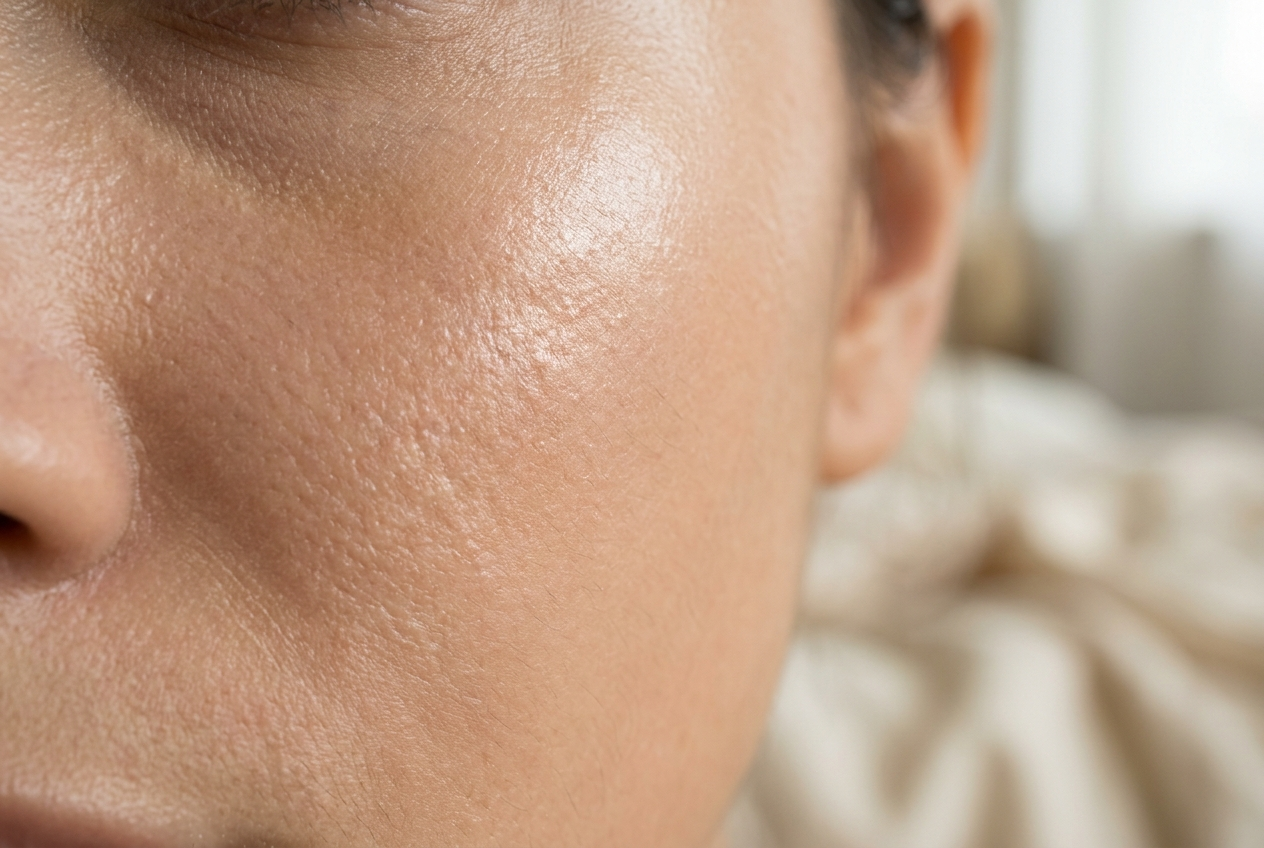
Run your fingertips over your cheek and you can usually feel it before you see it: the fine roughness, the little bumps around the nose and chin, the patch that never quite takes make-up evenly. Uneven texture is one of the most common concerns we hear about, and one of the most fixable — provided you understand what you are dealing with. "Texture" is a catch-all term, and the causes range from a build-up of dead surface cells to congested pores, past breakouts, or the natural slowing of skin renewal as we age.
This hub is your starting point. Below we set out what uneven texture really is, what drives it, and the small handful of ingredients that genuinely move the needle. The detailed how-to guides are linked at the end, so treat this page as the map and the individual articles as the routes.
What is uneven skin texture?
Uneven texture is any deviation from a smooth surface — roughness, small bumps, congestion or the shallow marks left after blemishes heal. It is a surface and near-surface issue, which is why it responds well to ingredients that work on the outer layers of skin.
Dead cells that refuse to shed cleanly, leaving a rough surface
The grainy bumps and blackheads that gather where pores clog
The tiny hard bumps that cluster on cheeks, arms and thighs
The soft dips left by acne that has long since cleared
Each has a slightly different fix, but the underlying strategy — encourage healthy shedding, support renewal, keep skin well hydrated — is remarkably consistent.
What causes rough, bumpy skin?
Most texture comes down to skin cells that are not turning over efficiently, so they accumulate on the surface instead of shedding cleanly. Add in trapped oil, and you get the classic combination of rough patches and congestion.
Skin renews itself on a cycle of roughly a month, and that cycle slows with age, sun exposure and a compromised barrier. When shedding lags, the surface thickens and light no longer bounces off it evenly — which is why textured skin can look dull as well as feel bumpy. Our companion guide on the causes of rough, bumpy skin goes through each in depth.
Best Ingredients for Uneven Texture
Chemical exfoliation is the single most effective step for smoother skin: it dissolves the bonds holding dead cells to the surface, so they release evenly instead of building up. The result, over a few weeks, is a softer, more refined finish. Retinoids work deeper still, prompting renewal over months, while hydration plumps the surface so it simply looks and feels smoother.
Lactic Acid
A gentler AHA that smooths the surface while supporting hydration
Polyhydroxy Acids (PHAs)
The mildest option, useful when skin is sensitive or new to acids
Retinol
Works deeper than acids to renew and refine over months; the strongest option for stubborn, longstanding texture and softening textural scarring
Hyaluronic Acid
Plumps and hydrates so the surface reflects light more evenly and feels supple
There are three exfoliating families worth knowing. AHAs such as glycolic acid and lactic acid work on the surface, making them the go-to for dullness and flaky skin. BHAs — chiefly salicylic acid — are oil-soluble, so they get inside the pore to clear congestion. PHAs are the gentlest option, useful when skin is sensitive or new to acids. Which one suits you comes down to skin type and your main complaint; our guide to chemical exfoliants walks through the decision.
A retinol or prescription-strength retinoid encourages a healthier renewal cycle and, used consistently, softens the appearance of textural scarring in a way exfoliation alone cannot. The trade-off is patience and a slow introduction, since retinoids can irritate if rushed. It rarely makes sense to layer strong acids and a retinoid on the same night; alternating them is gentler and just as effective. Hydration plays a quieter role: well-hydrated skin reflects light more evenly and feels supple, so hyaluronic acid and a good moisturiser belong in the texture toolkit too. For how to combine these actives, see our guide to using retinoids and acids together.
A Smoothing Routine for Texture
Morning
- Gentle cleanser
- Hydrating serum (hyaluronic acid)
- Moisturiser
- Sunscreen — always follow exfoliation with SPF, since freshly exfoliated skin is more sun-sensitive
Getting the Most from Your Routine
When should you see a professional?
See a professional when at-home care has plateaued, or when the texture is scarring rather than surface roughness. Indented acne scars, in particular, usually need in-clinic treatment to improve meaningfully.
A professional peel, microneedling course or laser resurfacing works at a depth home products cannot safely reach, and a practitioner can tell true scarring apart from the temporary marks that fade on their own. It is also worth a conversation if persistent bumps might be a skin condition rather than ordinary congestion. Our overview of at-home versus professional peels explains where that line sits.
Frequently Asked Questions
How long does it take to improve skin texture?
Give it a full skin cycle — around four to six weeks — before judging progress, and up to twelve weeks for retinoids to show their effect. Consistency several times a week beats occasional intensive sessions.
Can I use acids and retinol together?
You can use both in a routine, but it is usually best to alternate them on different nights rather than layer them. This gives the benefits of each while reducing the risk of irritation, which can worsen texture in the short term.
Is rough skin texture caused by dehydration?
Dehydration is a common contributor: when the barrier is depleted, the surface flakes and feels rough. Adding hyaluronic acid and ceramides alongside gentle exfoliation often smooths this type of texture quickly.
Will exfoliating more often give faster results?
No — over-exfoliating backfires, stripping the barrier and leaving skin red, tight and rougher than before. Two to three times a week is plenty. If skin feels irritated, scale back and let it recover.
Does sunscreen affect skin texture?
Yes. Daily SPF helps prevent the cumulative sun damage that coarsens skin over years, and it protects freshly exfoliated skin, which is more sun-sensitive. Skipping it undermines every other step.
Shop for skin texture
Building a texture routine is mostly about pairing the right exfoliant with steady support. Browse our full exfoliation range, or go straight to a specific acid — glycolic acid and lactic acid for surface smoothing and dullness, or salicylic acid for congestion. For longer-term renewal, explore our retinol range and our targeted serums for concerns such as textural scarring.
Explore more
- What causes rough, bumpy skin texture?
- How to improve skin texture: a step-by-step routine
- Retinoids and acids for skin texture: how to combine them
- Understanding chemical exfoliants: AHA, BHA and PHA
- Chemical peels: at home vs professional
Ready to shop? Browse our skincare for uneven texture.
In this guide
Short, practical reads on Skin Texture — tap any topic for the full guide.
Why Is My Skin Texture Rough and Bumpy? Causes and Fixes
Rough, bumpy or uneven skin texture has a few common causes. How to identify yours — build-up, dryness, congestion or sun damage — and smooth it.
Read the guide
Glycolic Acid vs Retinol: What's the Difference and Which Do You Need?

How to Improve Skin Texture: Exfoliation, Retinoids and Routine (UK)
How to improve uneven skin texture with the right exfoliation, retinoids and hydration in a simple routine. A practical UK guide.
Read the guide
Retinoids and Acids for Smoother Skin Texture
Retinoids and exfoliating acids both smooth texture differently. How they compare, how to combine them safely, and why SPF is non-negotiable.
Read the guide
Retinol Purge: What It Is and How Long It Lasts
Why skin can get worse before better when you start a retinoid, how long the purge lasts, how to tell it from a real reaction, and how to get through it comfortably.
Read the guideKey Ingredients for Skin Texture
The actives most worth knowing for this concern — tap any to read the full ingredient guide.
Not sure where to start?
Take our free skin type test to get routine and ingredient recommendations tailored to your skin.
Find Your Skin TypeNeed Personalised Advice?
Our skincare specialists can help you develop a treatment plan tailored to your specific needs.