
Ferulic Acid
Reviewed by Rosie · Last updated 14 Aug 2026
Also known as: 4-Hydroxy-3-Methoxycinnamic Acid, Hydroxycinnamic Acid
A plant antioxidant that stabilises vitamins C and E
At a glance
Best For Skin Types
All skin types
Addresses
Effective Concentrations
0.5–1%. Above roughly 1% there is little added benefit, and it can affect the colour and feel of the formula.
Usage Frequency
As directed on product packaging
EWG Safety Score


What Is Ferulic Acid?
Ferulic acid is a plant antioxidant found in the cell walls of rice bran, oats, wheat, apple seeds, coffee and various other plants, where it forms part of their own defence against environmental stress. In skincare it is nearly always produced synthetically, since extracting a consistent, pure supply from plant material is impractical.
What makes it interesting is less what it does alone than what it does in company. Ferulic acid is best known as a stabiliser: added to a formula containing vitamin C and vitamin E, it slows the rate at which those ingredients oxidise and appears to make the combination more effective than the sum of its parts. That is why it appears so consistently in well-regarded vitamin C serums rather than as a standalone product.
On an ingredients list it appears as Ferulic Acid, usually towards the middle of the list and typically at 0.5% to 1%. Above about 1% there is little evidence of additional benefit, and it can start to affect the colour and feel of the formula.
Despite the name it is not an exfoliating acid. It does not shed the surface of the skin, does not require a low pH to be tolerated, and does not cause the stinging or sun sensitivity associated with AHAs. It is very well tolerated in its own right.
One practical note: ferulic acid is itself prone to discolouring over time, and a serum containing it will often deepen in colour as it ages. A gradual shift towards amber is expected; a jump to dark brown suggests the formula has oxidised and should be replaced.
Benefits for Your Skin
How It Works
Ferulic acid is a free radical scavenger. Daylight, pollution and ordinary metabolic activity all generate unstable molecules in the skin that damage cell structures over time and contribute to the appearance of ageing and uneven tone. Ferulic acid neutralises them by donating electrons, in the same broad way as other antioxidants.
Its more distinctive contribution is regenerative rather than direct. Antioxidants are consumed as they work: once a vitamin C or vitamin E molecule has neutralised a free radical, it is itself in an altered, less useful state. Ferulic acid appears to help return them to their active form, so the antioxidant capacity of a formula lasts longer and works harder than the individual ingredients would manage separately. This recycling effect is the main reason the vitamin C, vitamin E and ferulic acid combination became a standard in the category.
It also stabilises the formula in the bottle. Vitamin C in particular oxidises readily on contact with light and air, and ferulic acid slows that process, meaning more of the vitamin C is still in a useful state by the time it reaches your skin. In this sense it improves both the shelf life and the delivered dose.
Separately, it appears to offer some support against the effects of UV exposure, which is why it is a morning ingredient. It is not a sunscreen and cannot replace one; it works alongside SPF by dealing with what gets past the filter.
Clinical Evidence & References
Ferulic acid has substantial clinical support as a potent antioxidant with a well-documented ability to stabilise and enhance the photoprotective effects of vitamins C and E. When combined with these vitamins, ferulic acid approximately doubles their UV-protective capacity and significantly improves their shelf stability—a synergistic benefit underpinned by multiple peer-reviewed studies. Beyond this amplifying role, ferulic acid provides direct free-radical neutralisation and demonstrates measurable anti-inflammatory properties that help reduce skin irritation.
The evidence base reflects consistent findings across several rigorous trials, though individual response varies somewhat depending on formulation, concentration, and baseline skin condition. Optimal results typically emerge over 8–12 weeks of regular morning use as part of a broader photoprotection strategy. Ferulic acid is generally well tolerated across skin types, though those with sensitivities to plant-derived compounds should introduce it gradually.
Published Research
-
Ferulic acid stabilizes a solution of vitamins C and E Journal of Investigative Dermatology, 2005
-
Ferulic Acid: Pharmacological and Toxicological Aspects Food and Chemical Toxicology, 2017
How to Use
Ferulic acid is almost always used as part of a formula rather than on its own, so most of the practical advice concerns the product it sits in.
- Look for the combination. Ferulic acid alongside vitamin C and vitamin E is where it earns its place. On its own it is a perfectly good antioxidant but a less compelling purchase.
- When: morning, before moisturiser and sunscreen. Antioxidant protection is most useful during the day.
- Order in the routine: cleanse, antioxidant serum, wait a minute, moisturiser, then SPF.
- Packaging matters. Opaque or dark glass, airless pumps, small bottles. Anything containing vitamin C and ferulic acid in a clear jar is a poor bet.
- Expect the colour to change. Gradual deepening towards amber is normal. Dark brown, or a sharp change in smell, means it is time to replace it.
- Pairs well with: vitamin C, vitamin E, niacinamide, hyaluronic acid and peptides.
- Sunscreen is still the priority. Antioxidants complement sun protection; they do not substitute for it.
- Store it away from heat and light. A cool, dark cupboard rather than a sunny bathroom shelf.
The benefits are protective rather than corrective, so they show up as skin that holds its condition over time rather than as a visible change within weeks.
Safety & Precautions
How widely it's used
Regulatory information
Standardised cosmetic-ingredient identifiers used by regulators.
Show identifiers
- INCI Name
- FERULIC ACID
- EC Number
- 214-490-0
- Function
- Antimicrobial, Antioxidant
Frequently Asked Questions
From the Clinic
Not sure what your skin actually needs?
Two minutes, a few questions, and we’ll point you at what matters — no guesswork.
Take the skin quizRelated Ingredients
Euterpe Oleracea Seed Extract
Antioxidant extract from açaí seeds with potential protective properties for skin
Exosomes
Cell-communicating and transporting ingredients
Ferrous Glycinate
An iron compound that supports skin's antioxidant defences
Forsythia Suspensa Fruit Extract
A plant extract from traditional medicine with antioxidant properties
Fragaria Ananassa (Strawberry) Fruit Extract
Rich in antioxidant compounds known as anthocyanins Source of saccharides that hydrate skin
Fragaria Ananassa Seed Extract
Plant-derived antioxidant from strawberry seeds that helps protect skin from environmental stress
Articles About Ferulic Acid
Learn more about this ingredient with our expert guides and articles.

What Is a Vitamin C Serum Actually Doing to Your Skin?
Ask ten people what vitamin C serum does and you’ll get ten different answers — "brightening", "anti-ageing", "for dark spots" — and none of them are wrong exactl
Read article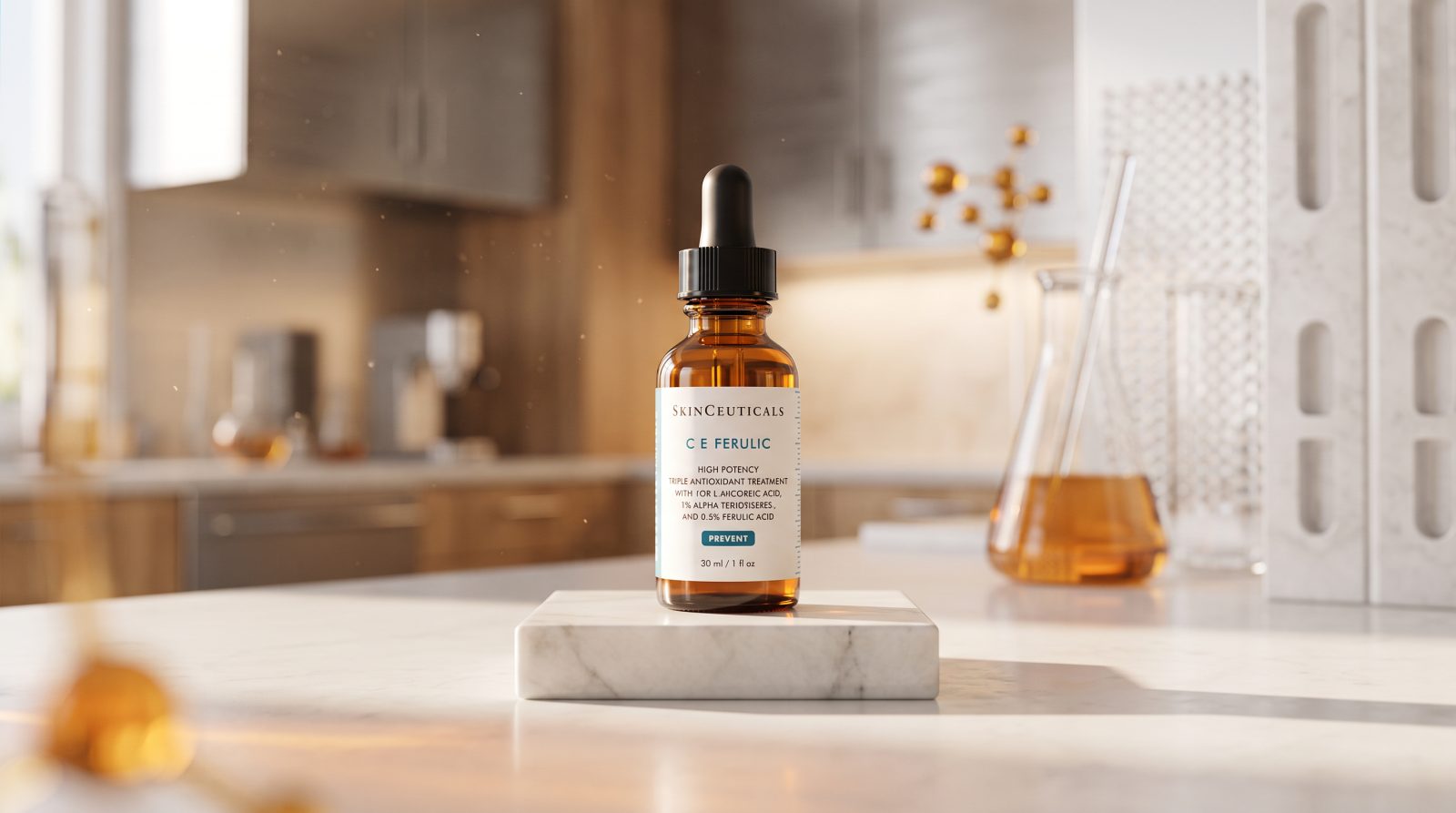
SkinCeuticals UK: The Complete Brand Guide
Your complete guide to SkinCeuticals in the UK: the antioxidant science, hero vitamin C serums like C E Ferulic, and how to choose where to start.
Read article
The Best Vitamin C Serums UK (2026): A Buyer's Guide by Form, Strength and Skin Type
A practical guide to choosing the best vitamin C serum for your skin type and concern, from gentle daily antioxidants to high-strength brightening formulas.
Read articleLearn More About Skincare Ingredients
Explore our comprehensive ingredient glossary to understand what's in your products.
Browse All IngredientsShop Our Products
Find professional skincare solutions at Skintique.