
Addresses
Effective Concentrations
Typically well under 1%, and often a fraction of that. The specific peptide named matters far more than the amount.
EWG Safety Score


What Is Peptides?
Peptides are short chains of amino acids, the same building blocks that make up proteins. The distinction is simply one of length: string enough amino acids together and you have a protein such as collagen; keep the chain short, typically between two and around fifty, and you have a peptide. That difference in size is what makes them useful on skin, because proteins are far too large to go anywhere and peptides are not.
The word covers a very broad category rather than a single ingredient, which is the main reason it can be confusing on a label. Palmitoyl Tripeptide-1, Palmitoyl Tetrapeptide-7, Acetyl Hexapeptide-8, Copper Tripeptide-1 and Palmitoyl Pentapeptide-4 all appear under the peptide heading and behave quite differently from one another. Saying a product contains peptides is a little like saying a meal contains vegetables.
Broadly, they are grouped by what they appear to do. Signal peptides are associated with the skin’s production of structural proteins. Carrier peptides deliver trace elements such as copper. Enzyme-inhibiting peptides interfere with the breakdown of existing structure. Neurotransmitter-inhibiting peptides are the group marketed in connection with expression lines.
The palmitoyl prefix that appears so often is a fatty acid attached to the chain to help it pass through the skin’s lipid layer, since peptides are water-loving and the barrier is not.
They are used at very low percentages, usually a fraction of a percent, and appear mainly in serums, eye products and moisturisers aimed at the look of firmness and fine lines. They are notably well tolerated, which is why they are often recommended for skin that reacts badly to retinoids.
Benefits for Your Skin
How It Works
Peptides act as messengers rather than as raw materials. When the skin’s supporting structure is damaged, collagen breaks down into characteristic short fragments, and the presence of those fragments is one of the signals the skin uses to recognise that repair is needed. Many cosmetic peptides are designed to resemble those fragments. Applied to skin, they appear to prompt a repair response without any damage having occurred, which is the central idea behind the whole category.
Different groups take different routes. Signal peptides encourage cells to produce more of the structural proteins that keep skin looking firm. Carrier peptides deliver trace elements the skin needs for those processes, with copper being the most familiar example. Enzyme-inhibiting peptides work from the other direction, slowing the enzymes that break existing collagen down. Neurotransmitter-inhibiting peptides interfere in a small way with the signalling between nerves and facial muscles, which is the basis for their association with the look of expression lines, though the effect of a topical product is modest and not comparable to a clinical treatment.
Two honest caveats sit alongside this. Getting a peptide through the barrier in a useful state is genuinely difficult, which is why delivery systems and the fatty acid attachments matter so much. And the evidence base is uneven: it is strong for some specific peptides and thin for others, so the category as a whole is less uniformly well supported than something like retinol or vitamin C. Peptides are best regarded as a gentle, supportive addition rather than a replacement for the better-established actives.
Clinical Evidence & References
- Cosmetics, May 2017, pages 1-14
- ChemMedChem, August 2016, issue 16, pages 1850-1855
- Bulletin of Experimental Biology and Medicine, May 2016, issue 1, pages 175-178
- Journal of Drugs in Dermatology, April 2016, supplemental, pages 63-71
- Austin Journal of Pharmacology and Therapeutics, August 2014, pages 1-9
- Biological Trace Element Research, August 2013, issue 2, pages 268-274
- Clinical Chemistry and Laboratory Medicine, April 2013, pages 1-8
- Dermato Endocrinology, July 2012, issue 3, pages 308-319
Published Research
-
Peptides and proteins for skin care Cosmetics, 2018
-
Anti-aging peptides for cosmetics Molecules, 2021
How to Use
Peptides are among the least demanding ingredients to use, which is a large part of their appeal.
- When: morning and night. There is no tolerance to build, no sun sensitivity and no need for breaks.
- Order in the routine: after cleansing and any watery layers, before moisturiser. If a peptide serum is the thickest thing you use, it goes last before SPF.
- Leave-on only. A peptide cleanser is money spent on something you rinse straight off.
- Look for named peptides, not just the word on the front. A specific INCI name such as Palmitoyl Tripeptide-1 tells you what you are actually buying.
- Pairs well with: niacinamide, hyaluronic acid, ceramides, squalane and antioxidants. Peptides are frequently used to support skin that is also on a retinoid.
- Keep apart from strong acids in the same layer. A low-pH environment can affect some peptides, so use exfoliating acids at the other end of the day rather than directly underneath.
- Copper peptides are a special case and are best used on their own rather than layered with vitamin C or acids.
- Sunscreen still does the heavy lifting. Peptides support the skin’s structure; daily SPF is what protects it.
Expect a gradual effect on the look of firmness and fine lines over two to three months, and treat any promise of dramatic short-term change with scepticism.
Safety & Precautions
Peptides are well tolerated: they do not exfoliate and they do not increase sun sensitivity, and they are generally regarded as one of the better-tolerated categories in cosmetic formulation. Reported reactions are uncommon, though the published human data on peptide skincare is thinner than the marketing suggests. Where a reaction does occur, it more often traces back to a fragrance, preservative or essential oil in the same formula than to the peptide.
- If you’re pregnant or breastfeeding, please check with us first — hello@skintique.co.uk.
- Patch test on the inner forearm for a few days if your skin is reactive, and avoid broken or irritated skin.
- "Peptide" covers hundreds of different molecules, each with its own safety assessment, so tolerating one is no guarantee for all.
- If you are managing a diagnosed skin condition, speak to your GP or a dermatologist rather than relying on skincare alone.
Frequently Asked Questions
From the Clinic
Not sure what your skin actually needs?
Two minutes, a few questions, and we’ll point you at what matters — no guesswork.
Take the skin quizRelated Ingredients
Copper Peptides
A carrier peptide that delivers copper into the skin
Matrixyl
The collagen stimulator
Argireline
The expression line relaxer
Niacinamide
Vitamin B3, and one of the easiest actives to live with
Retinol
The gold standard anti-ageing ingredient
Hyaluronic Acid
A humectant that holds water in the upper layers of skin
Articles About Peptides
Learn more about this ingredient with our expert guides and articles.
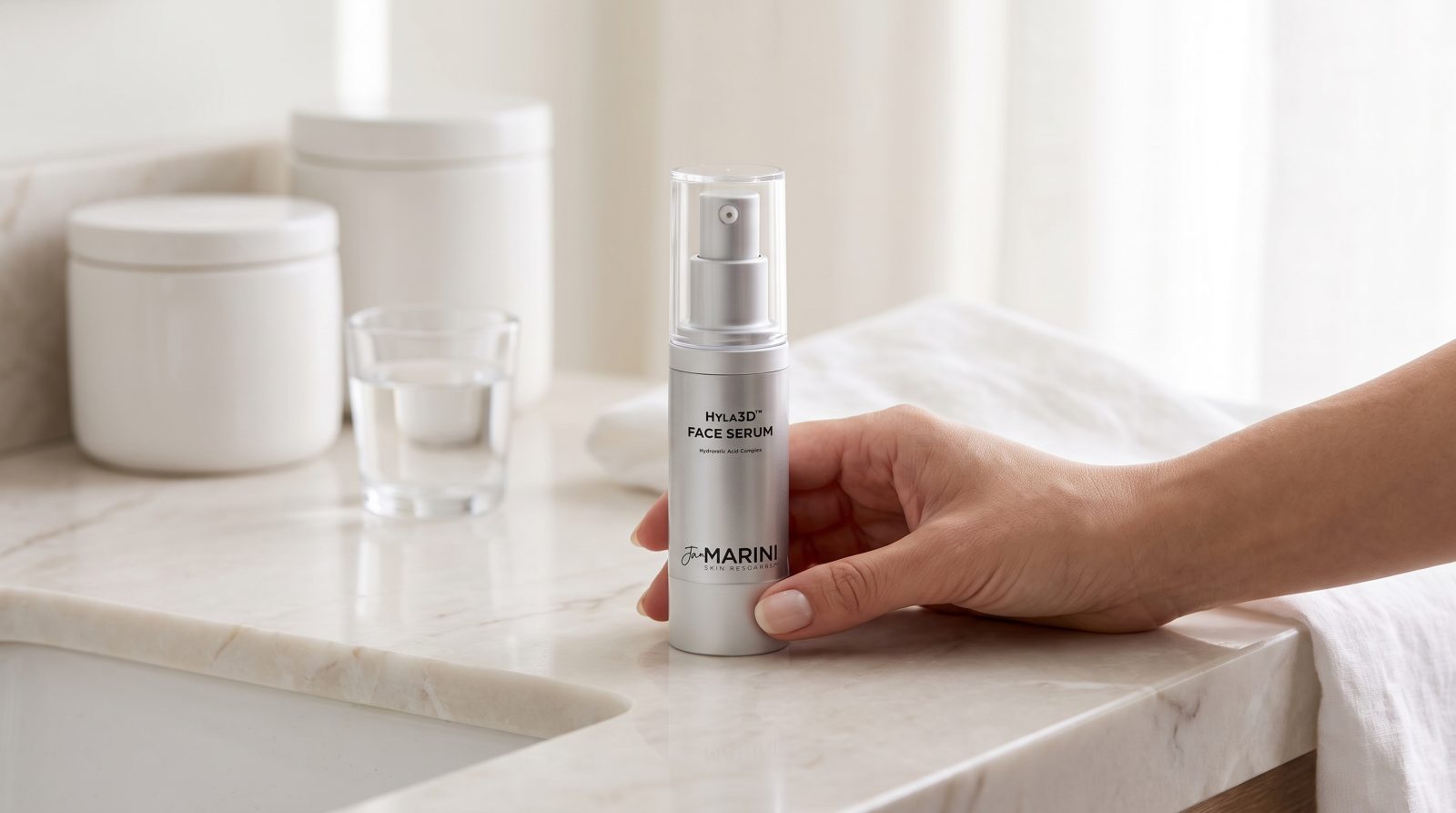
Jan Marini UK: The Complete Brand Guide
Your expert guide to Jan Marini in the UK: the science, hero products like Peptide Extreme and Hyla3D, and how to build a routine. Shop the range at Skintique.
Read article
Mature Skin: How to Build the Right Routine (UK Guide)
How to build a routine for mature skin - retinoids, peptides, vitamin C and daily SPF. A warm, expert UK guide with a simple AM/PM plan and FAQs.
Read article
Best Eye Cream and Eye Serum UK: A Buyer's Guide by Concern
Eye creams and eye serums are not interchangeable. This Academy guide sorts professional eye care by concern — dark circles, puffiness, fine lines and crepiness, dryness — and by format, so you can pick the texture and strength that suits your skin rather than buying on packaging alone.
Read article
Alastin UK: The Complete Brand Guide
Your guide to Alastin in the UK: TriHex Technology, hero products and how to build a routine. Shop the range at Skintique, an authorised UK stockist.
Read article
The Complete Guide to Anti-Ageing Skincare
Your complete guide to anti-ageing skincare at every age. Discover the proven ingredients, build your routine, and learn when to start for best results.
Read article
The Art of Ingredient Layering
Master the art of layering skincare ingredients for maximum effectiveness. Learn the correct order and which ingredients to never combine.
Read articleLearn More About Skincare Ingredients
Explore our comprehensive ingredient glossary to understand what's in your products.
Browse All IngredientsShop Our Products
Find professional skincare solutions at Skintique.