
Obagi Nu-Derm Exfoderm Review
The Verdict
Choose the standard Exfoderm if your skin is normal to dry, sensitive, or new to chemical exfoliation — it's the gentler entry point in Obagi's exfoliating lotion pairing. If you already tolerate AHAs well and lean normal to oily, Exfoderm Forte's stronger two-acid formula is likely to do more.

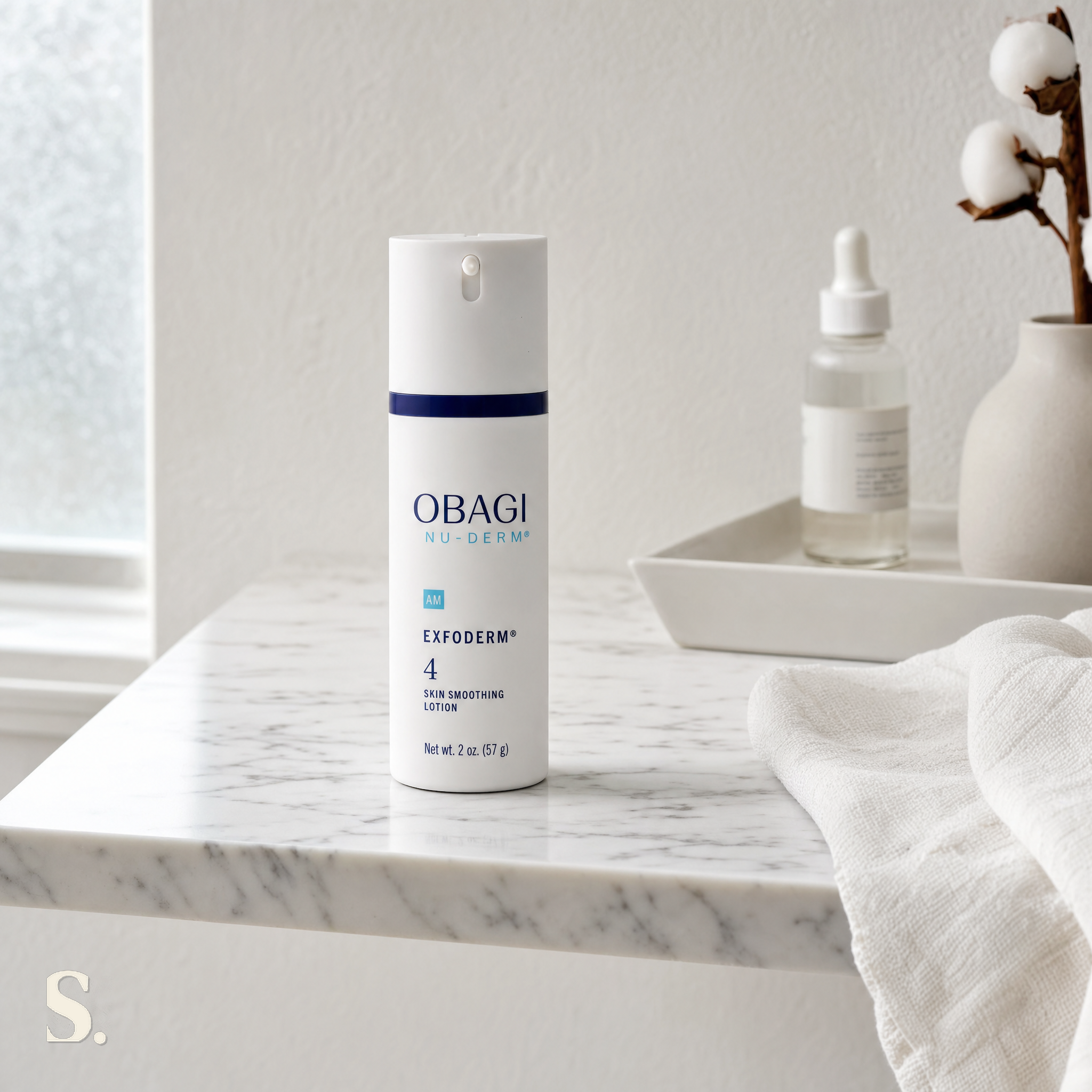
Obagi Nu-Derm Exfoderm is a lightweight, leave-on exfoliating lotion built around Phytic Acid, sold as Step 4 of the Nu-Derm system but also available to buy on its own. Formulated for normal to dry and sensitive skin, it works with regular use to help improve the appearance of dullness, uneven tone and rough texture, without the stronger acid combination used in its sibling formula, Exfoderm Forte.
What it is and where it fits
Exfoderm sits in the exfoliation step of Obagi's Nu-Derm system, a dermatologist-developed, multi-step range built on the idea that skin responds better to a coordinated sequence of products — cleanser, treatment toner, exfoliation, correction, and daily sun protection — than to any single product used alone. It's sold both as part of a full Nu-Derm kit and as a standalone product, which is how it's stocked here, so trying it doesn't require committing to the whole system.
Where Exfoderm Forte is the advanced-strength option for normal to oily, exfoliant-experienced skin, the standard Exfoderm is the gentler, more broadly tolerated formula in the pairing — the more sensible starting point for anyone newer to chemical exfoliation, or whose skin runs dry or sensitive.
The key active
According to Obagi's product information, Exfoderm's exfoliating action comes from a single active rather than a multi-acid blend:
- Phytic Acid — a gentle alpha-hydroxy acid that exfoliates dull, damaged surface cells while also acting as an antioxidant. It's generally considered milder than glycolic or lactic acid, which is part of why Obagi positions this formula for drier, more sensitive skin types. See our Phytic Acid glossary entry for more on how it behaves and why formulators often favour it for lower-irritation exfoliating products.
- Glycerin — a humectant included to help prevent the dryness that chemical exfoliants can otherwise cause, drawing moisture to the skin's surface.
- Canola Oil — an emollient that supports the formula's soothing, cream-to-gel finish and helps offset tightness after application.
Exfoderm vs Exfoderm Forte
Both sit under the same Nu-Derm step; the table below sets out how they differ on paper — always confirm current formulation details on the product page before choosing.
| Nu-Derm Exfoderm (standard) | Nu-Derm Exfoderm Forte | |
|---|---|---|
| Positioning | Lightweight, gentler formula | Advanced / step-up strength |
| Key actives | Phytic Acid, Glycerin, Canola Oil | Glycolic Acid 6%, Lactic Acid 4%, Phytic Acid, Emu Oil |
| Best suited to | Normal to dry, sensitive, or exfoliant-newer skin | Normal to oily, exfoliant-experienced skin |
| Size | 57g | 57g |
If your skin already tolerates AHAs comfortably and leans normal to oily, Exfoderm Forte is the stronger step-up formula. Read the full Nu-Derm Exfoderm Forte review · Shop Nu-Derm Exfoderm Forte.
Who it suits
- Normal to dry or sensitive skin types wanting a gentler leave-on exfoliating step
- Those new to chemical exfoliation who want to build tolerance gradually
- Skin showing dullness, rough texture, or uneven tone that suits a milder acid than glycolic or lactic acid
It's a less obvious fit for oilier, congestion-prone skin already comfortable with stronger acids — Exfoderm Forte is the more targeted option there.
How to use it
As a leave-on chemical exfoliant, Exfoderm is applied to clean, dry skin rather than rinsed off. It's still worth introducing gradually — a few times a week to start, building up only once your skin tolerates it well, with no persistent redness or flaking. Avoid layering it with other exfoliating actives (other AHAs, BHAs, retinoids) on the same night, and use a daily SPF, since exfoliating acids can increase sun sensitivity. A patch test before first full use is a sensible precaution with any new leave-on acid product.
DATA GAP: Obagi's specific AM/PM timing and build-up frequency for this product, and the exact Phytic Acid concentration, were not confirmed in the published product data available at the time of writing — the guidance above reflects general AHA-introduction practice rather than an Obagi-specific protocol. Check the product packaging or ask our team before starting if you want product-specific directions.
What you might notice on application
Obagi describes the texture as a smooth, quick-absorbing cream-to-gel with no greasy residue. Because Phytic Acid is comparatively mild, the sensation on application is usually less noticeable than with stronger acids, though light tingling can occur as a normal response — stop use and reassess frequency if it's strong, persistent, or accompanied by redness. Some initial dryness or flaking is possible as skin adjusts, particularly in the first few weeks; easing back the frequency is a reasonable way to manage this.
Building it into a wider Obagi routine
Exfoderm is one step within the Nu-Derm system rather than a complete routine on its own. For skin that's ready for a stronger exfoliating step over time, the natural next move within the same pairing is Nu-Derm Exfoderm Forte, which combines glycolic and lactic acid for a more noticeable effect once your skin has built tolerance. For the rest of the range, including vitamin C, retinol and eye care, see our Obagi brand hub.
If you're pregnant or breastfeeding, please contact our team for advice before use.