
Obagi Sun Shield Mineral Broad Spectrum SPF50 Review
The Verdict
Obagi Sun Shield Mineral Broad Spectrum SPF50 is the physical-sunscreen option in Obagi's SPF line-up, built entirely on zinc oxide and titanium dioxide rather than chemical filters. That makes it a sensible default for sensitive, reactive or recently-treated skin — anyone using retinol, coming off a peel or laser session, or who reacts to chemical sunscreens generally. If you'd rather your SPF doubled as light coverage, the Sun Shield Tint Cool or Warm versions carry the same mineral base with added tint; this untinted formula is the one to reach for when you just want protection, no colour, under makeup or on its own.

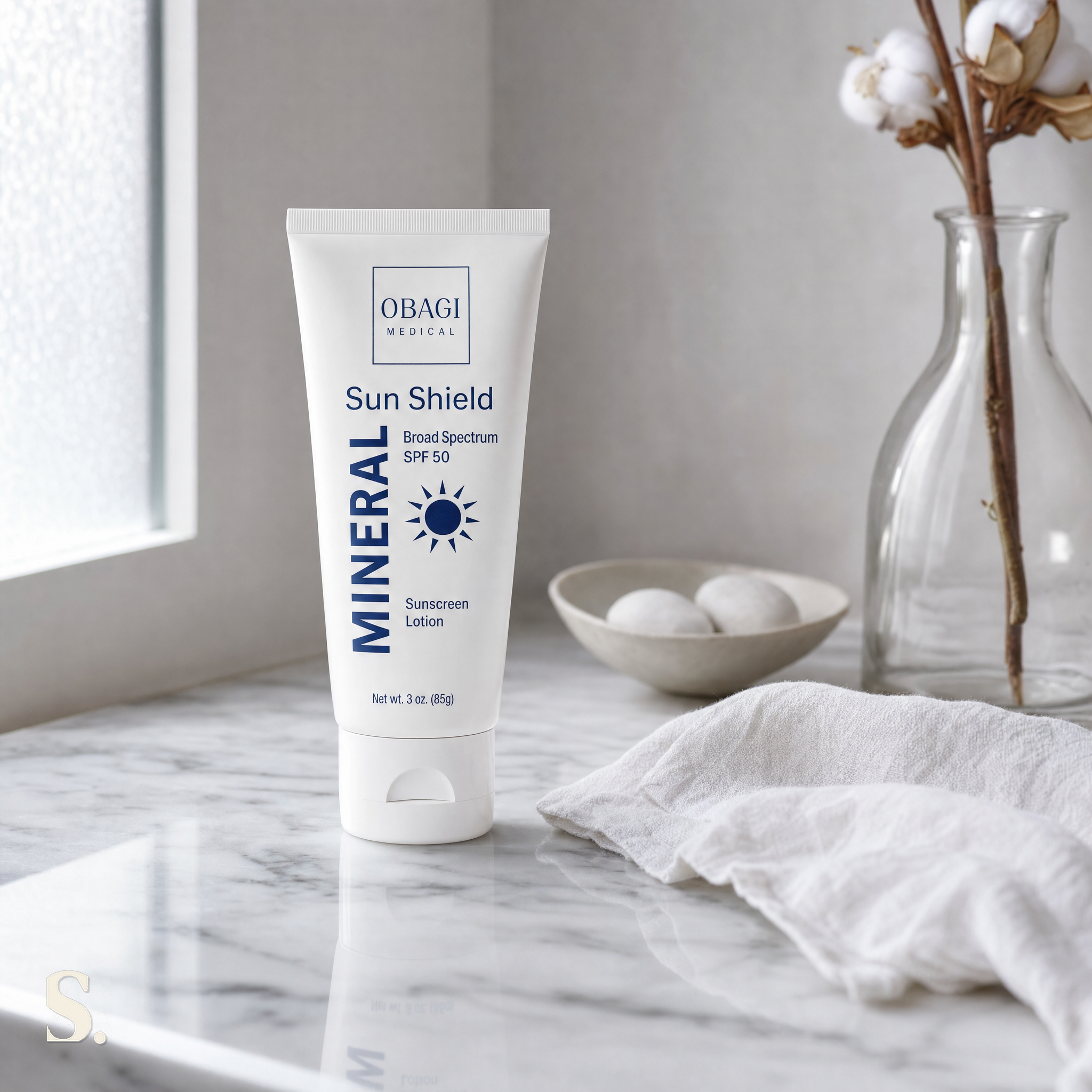
Obagi Sun Shield Mineral Broad Spectrum SPF 50 | Physical Sunscreen | 85g
£75.00
Obagi Sun Shield Mineral Broad Spectrum SPF50 is a 100% mineral sunscreen, meaning it relies entirely on physical UV filters — zinc oxide and titanium dioxide — rather than the chemical filters used in most everyday sunscreens. It's formulated for broad-spectrum SPF50 protection and positioned by Obagi for sensitive and post-procedure skin, where a physical filter is often the more comfortable choice.
Key facts
| Attribute | Detail |
|---|---|
| Format | 100% mineral (physical) sunscreen, 85g |
| SPF | SPF50, broad spectrum (UVA/UVB) |
| Active UV filters | Zinc Oxide (15.6%) and Titanium Dioxide (6.2%) |
| Other actives | Nasturtium Extract, Dipotassium Glycyrrhizate |
| Finish | Sheer, quick-absorbing, non-greasy |
| Formulated for | Sensitive, normal, combination and oily skin; suited to post-procedure use |
What makes it a mineral sunscreen
Chemical sunscreens absorb UV radiation and convert it to heat; mineral (physical) sunscreens like this one sit on the skin's surface and reflect and scatter UV rays instead, using zinc oxide and titanium dioxide as the active filters. That distinction matters most for anyone whose skin reacts to chemical filters, or who's recently had a procedure that's left the skin barrier more reactive than usual — a physical filter is generally considered the gentler starting point in both cases. Obagi lists the product as recommended by the Skin Cancer Foundation as an effective daily broad-spectrum sunscreen, per Obagi's own product information.
The formula also includes Nasturtium Extract, which Obagi's product information credits with extending protection beyond UVA/UVB into infrared (IR) and high-energy visible (HEV) light, including blue light from screens — alongside Dipotassium Glycyrrhizate, a licorice-root-derived ingredient included for its calming properties. We haven't independently verified the IR/HEV protection claim beyond what Obagi states in its own product description, so treat it as manufacturer-sourced rather than independently tested.
Why two mineral filters instead of one
Zinc oxide and titanium dioxide both work by sitting on the skin's surface and reflecting or scattering UV radiation rather than absorbing it, but they don't cover the UV spectrum identically. Zinc oxide is generally considered the broader of the two filters on its own, with meaningful coverage across UVA and UVB; titanium dioxide tends to be strongest against UVB and shorter-wavelength UVA. Combining the two, as this formula does, is a standard approach in mineral sunscreen formulation for building genuinely broad-spectrum coverage from physical filters alone, rather than relying on a single mineral ingredient to do the whole job. That's a general point about how mineral sunscreens are typically formulated, not a claim about this specific product's tested performance.
What's deliberately left out
Alongside what's in the formula, what's been left out is part of the brief. There are no chemical UV filters (oxybenzone, avobenzone and similar are common examples used in other sunscreens), which is the whole point for anyone choosing a mineral sunscreen specifically to avoid them. Obagi also formulates it as non-comedogenic and hypoallergenic, aimed at reducing the chance of clogged pores or reactive irritation — relevant if you've had issues with either from other sunscreens in the past.
Fitting it into a wider SPF routine
A sunscreen only does its job if it's the last step of a morning routine and it's actually reapplied, and that's true whatever the formula. Where a mineral SPF earns its place is in routines built around other actives — retinol, vitamin C, exfoliating acids — where the skin barrier is already doing more work than usual and a gentler UV filter reduces the chance of the sunscreen itself becoming the thing that irritates.
Who it's formulated for
- Sensitive, normal, combination or oily skin types
- Post-procedure skin — after a chemical peel, laser treatment or microneedling, where a gentler physical filter is often preferred
- Anyone who reacts to chemical sunscreen filters and wants to avoid them entirely
- Acne-prone skin, given the non-comedogenic formulation
- Retinol or other active-ingredient users who need reliable daily SPF alongside their routine
Texture and how it wears
Mineral sunscreens have a reputation for sitting heavily or leaving a visible white cast, and that's the main thing this formula is built to avoid. Obagi describes it as sheer and quick-absorbing, with a lightweight, non-greasy finish that's comfortable enough to sit under makeup — a meaningful difference from older-style mineral formulas for anyone who's avoided physical sunscreens in the past because of texture.
Layering it with the rest of your routine
Because the finish is designed to be lightweight rather than thick, it's built to sit under the rest of a morning routine without pilling or dragging on other products — moisturiser first, then this as the final SPF step, then makeup on top if you're wearing any. Reapplication over makeup is the practical sticking point with most sunscreens, mineral or chemical; a setting-spray or cushion-format SPF is generally the easier way to top up over the day without disturbing makeup, and this cream format is best treated as your first, full-strength application rather than something you'll reapply on top of finished makeup.
Untinted vs the Sun Shield Tint range
Obagi sells this mineral base in more than one finish. This untinted version is the one to choose when you want protection with no added colour — under makeup, layered with other actives, or simply as a plain daily SPF. If you'd rather your sunscreen doubled as light coverage, Obagi also makes Sun Shield Tint Cool SPF50 and Sun Shield Tint Warm SPF50 — the same mineral base with a cool- or warm-leaning tint added, for anyone who wants SPF and a bit of evened-out tone in one step. Which of the two tints suits you comes down to your undertone rather than your skin type, so it's worth checking both before choosing.
Pairing it with a retinol routine
If you're using an Obagi retinol — see our Obagi retinol guide — daily SPF the following morning isn't optional, since retinol can increase sun sensitivity. A 100% mineral sunscreen like this one is a reasonable default for that pairing, precisely because retinol-treated skin is often more reactive and better suited to a physical filter than a chemical one.
How to use it
Apply as the final step of your morning routine, after moisturiser and before makeup, and reapply through the day if you're outdoors for extended periods — standard sunscreen practice generally recommended by dermatologists, not a claim specific to this product. Obagi's own packaging carries the definitive application and reapplication instructions for this formula; we haven't sourced an exact reapplication interval or application amount from Shopify's product data, so we're not stating a specific figure here.
Pregnancy and breastfeeding
If you're pregnant or breastfeeding, please contact our team for advice before use.
Common questions
Is this a chemical or mineral sunscreen? It's 100% mineral (physical) — the active UV filters are zinc oxide and titanium dioxide, with no chemical filters in the formula.
Is it suitable for sensitive or post-procedure skin? Yes — Obagi formulates and positions it specifically for sensitive and post-procedure skin, where a physical filter is generally the gentler choice.
Does it leave a white cast? Obagi describes the formula as sheer and quick-absorbing rather than the thicker, more visible finish associated with older mineral sunscreens, though how it looks can vary by skin tone.
What's the difference between this and the Sun Shield Tint versions? Same mineral base and SPF50 protection, but the Tint Cool and Tint Warm versions add a tint for light coverage; this version is untinted.
Can I wear it under makeup? Yes — the lightweight, quick-absorbing finish is designed to sit comfortably under makeup.
Do I need this if I'm using Obagi retinol? Daily SPF is standard practice with any retinol, since retinol can increase sun sensitivity — a mineral sunscreen is a reasonable default given retinol-treated skin is often more reactive.
Can I use this if I'm pregnant or breastfeeding? If you're pregnant or breastfeeding, please contact our team for advice before use.