
Best iS Clinical Sunscreens: Mineral vs Hybrid SPF Compared
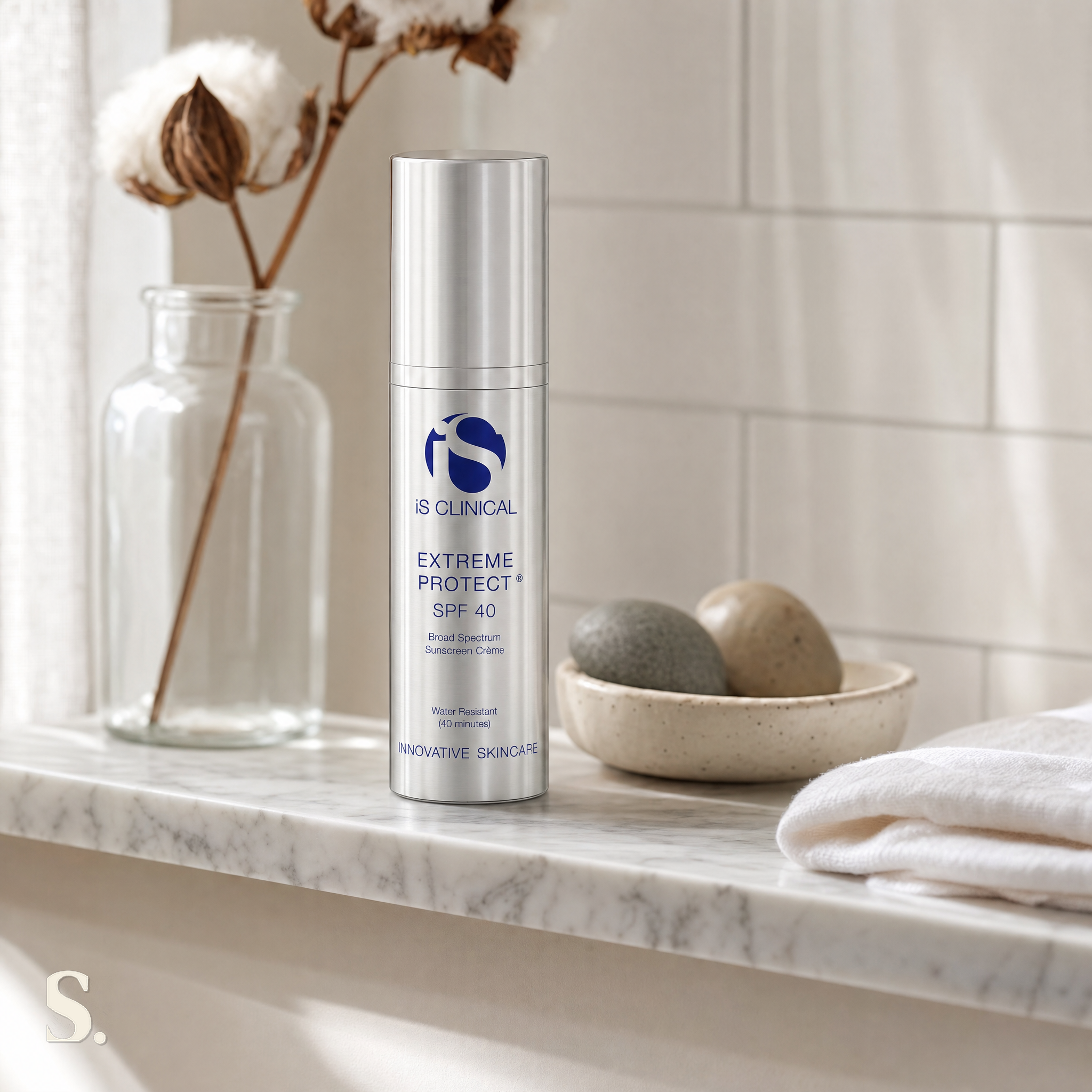
iS Clinical's four sunscreens split cleanly by filter type: Extreme Protect SPF 40, Eclipse SPF 50+ and Liprotect SPF 35 use zinc oxide and titanium dioxide only, with no chemical filters. Extreme Protect SPF 30 is the one hybrid formula, adding octinoxate alongside zinc oxide. That's a genuine formulation difference worth knowing before you choose, not a ranking of which SPF works best.
Why the filter type is the useful split here
iS Clinical makes four sunscreens for the UK range, and none of them is objectively "better" than another – they're built for different jobs and different textures. The one factual difference worth building a routine decision around is filter type. Three of the four formulas (Extreme Protect SPF 40, Eclipse SPF 50+ and Liprotect SPF 35) rely entirely on the mineral filters zinc oxide and titanium dioxide, confirmed from each product's stated active-ingredient list. Extreme Protect SPF 30 is the exception: it combines zinc oxide with octinoxate, a chemical UV filter. If you're specifically choosing (or avoiding) a mineral-only sunscreen – for sensitive skin, post-procedure care, or personal preference – this is the detail that actually decides which of the four is right for you.
All-mineral formulas: zinc oxide and titanium dioxide only
iS Clinical Extreme Protect SPF 40
A 100% mineral formula built on Zinc Oxide 15.3% and Titanium Dioxide 1.3%, with no chemical UV filters in the ingredient list. It's water-resistant for 40 minutes, fragrance-free, and applies as a richer cream that sets to a sheer finish – available Translucent or in the tinted PerfecTint Beige and PerfecTint Bronze shades. Read the full iS Clinical Extreme Protect SPF 40 review for texture notes and how it wears under make-up.
iS Clinical Eclipse SPF 50+
The highest SPF number in the range, and also all-mineral – Titanium Dioxide 5.20% and Zinc Oxide 1.10%, with no chemical filters. Eclipse is formulated oil-free and fragrance-free with an ultra-sheer, matte finish, water-resistant for 40 minutes, and comes Translucent or in a single PerfecTint Beige shade. See the full iS Clinical Eclipse SPF 50+ review for how the matte finish compares with Extreme Protect SPF 40's richer starting texture.
iS Clinical Liprotect SPF 35
A dedicated lip SPF, also mineral-only – Zinc Oxide 10.2% and Titanium Dioxide 1.0%. It's a transparent, non-glossy, non-sticky balm with a light cherry flavour (worth knowing if you're avoiding added flavour or fragrance ingredients), positioned by the brand for everyday lip protection as well as pre- and post-procedure lip care. Full detail in our iS Clinical Liprotect SPF 35 review.
The hybrid formula: mineral plus a chemical filter
iS Clinical Extreme Protect SPF 30
The one product in this set that isn't all-mineral. Extreme Protect SPF 30 combines Octinoxate 5.50%, a chemical UV filter, with Zinc Oxide 4.12%. In exchange, the formula is lighter and faster-absorbing than the richer SPF 40 texture, with a natural finish, and the brand states it's suitable for face, neck and chest. If you're specifically avoiding chemical filters – whether by clinician advice or personal preference – this is the one to skip in favour of SPF 40 or Eclipse SPF 50+. Full detail in our iS Clinical Extreme Protect SPF 30 review.
Side-by-side: filter type, SPF and finish
| Product | Filter type | SPF | Finish | Best for |
|---|---|---|---|---|
| Extreme Protect SPF 40 | All-mineral | SPF 40 | Rich cream → sheer | Fuller coverage, tinted options |
| Extreme Protect SPF 30 | Mineral + chemical (octinoxate) | SPF 30 | Lightweight, natural finish | Faster-absorbing, everyday wear |
| Eclipse SPF 50+ | All-mineral | SPF 50+ | Ultra-sheer, matte | Oily/combination skin, highest SPF |
| Liprotect SPF 35 | All-mineral | SPF 35 | Transparent balm | Dedicated lip protection |
Which one fits your routine?
- You're specifically avoiding chemical UV filters – choose Extreme Protect SPF 40 or Eclipse SPF 50+, both confirmed 100% mineral. Liprotect SPF 35 covers the same brief for lips.
- You want the highest SPF number in the range – Eclipse SPF 50+ is the only SPF 50+ product here, and it's also all-mineral.
- You have oily or combination skin – Eclipse SPF 50+'s oil-free, matte finish is built for that; Extreme Protect SPF 40's richer starting texture may feel heavier.
- You want the fastest-absorbing, most "invisible" texture – Extreme Protect SPF 30 is the lightest of the three face formulas, but it's the one with a chemical filter, so it's not the pick if you're avoiding those specifically.
- You want tint or shade options – Extreme Protect SPF 40 offers the widest choice (Translucent, PerfecTint Beige, PerfecTint Bronze); Eclipse SPF 50+ offers Translucent or PerfecTint Beige.
- Your lips need SPF too – Liprotect SPF 35 is the only product here built specifically for that, and it's mineral-only.
How SPF fits into a wider iS Clinical routine
None of these four sunscreens are treatment products – they're the protective step that stops daily UV exposure working against whatever else is in your routine, including any brightening or vitamin C serum. If pigmentation or uneven tone is what's driving the search for a sunscreen, our Best iS Clinical Products for Hyperpigmentation & Uneven Tone guide covers the treatment side and explains why daily SPF is the non-negotiable partner step for any brightening product. For the full range, see the iS Clinical range guide.
The bottom line
This isn't a ranking – all four do their core job of broad-spectrum sun protection. The genuinely useful decision point is filter type: Extreme Protect SPF 40, Eclipse SPF 50+ and Liprotect SPF 35 are confirmed 100% mineral, built on zinc oxide and titanium dioxide alone. Extreme Protect SPF 30 is the hybrid option, trading a lighter, faster-absorbing texture for a formula that also contains a chemical filter. Pick on filter type first, then let texture, tint and SPF number narrow it down from there.
Frequently asked questions
Which iS Clinical sunscreens are mineral-only?
Extreme Protect SPF 40, Eclipse SPF 50+ and Liprotect SPF 35 are all confirmed 100% mineral, formulated with zinc oxide and titanium dioxide and no chemical UV filters. Extreme Protect SPF 30 is the exception – it's a hybrid formula that also contains octinoxate.
What's the difference between Extreme Protect SPF 40 and SPF 30?
Filter type is the main difference: SPF 40 is 100% mineral (zinc oxide and titanium dioxide), while SPF 30 combines zinc oxide with the chemical filter octinoxate. SPF 30 also has a lighter, faster-absorbing texture, while SPF 40 applies as a richer cream that sets to a sheer finish.
Which iS Clinical SPF is best for oily skin?
Eclipse SPF 50+ is formulated oil-free with an ultra-sheer, matte finish, which tends to suit oily and combination skin better than Extreme Protect SPF 40's richer starting texture.
Is there a mineral SPF for lips?
Yes – Liprotect SPF 35 is iS Clinical's dedicated lip sunscreen, also confirmed mineral-only (zinc oxide and titanium dioxide), with a light cherry flavour.
Can these sunscreens be used with a brightening serum?
Yes – sunscreen is the protective step that any brightening or vitamin C serum needs alongside it, not instead of it. See our hyperpigmentation guide for how the two work together.
Are any of these safe to use if I'm pregnant or breastfeeding?
If you're pregnant or breastfeeding, please contact our team for advice before use.