
iS Clinical Eclipse SPF 50+ Review
The Verdict
Eclipse SPF 50+ is the pick if you want confirmed mineral-only protection at the highest SPF number in iS Clinical's range, in an oil-free, matte finish suited to oily or combination skin. It's not the right pick if you want tinted shade choice beyond a single Beige option, or the richer, more coverage-forward texture of Extreme Protect SPF 40 — see that review for the alternative.

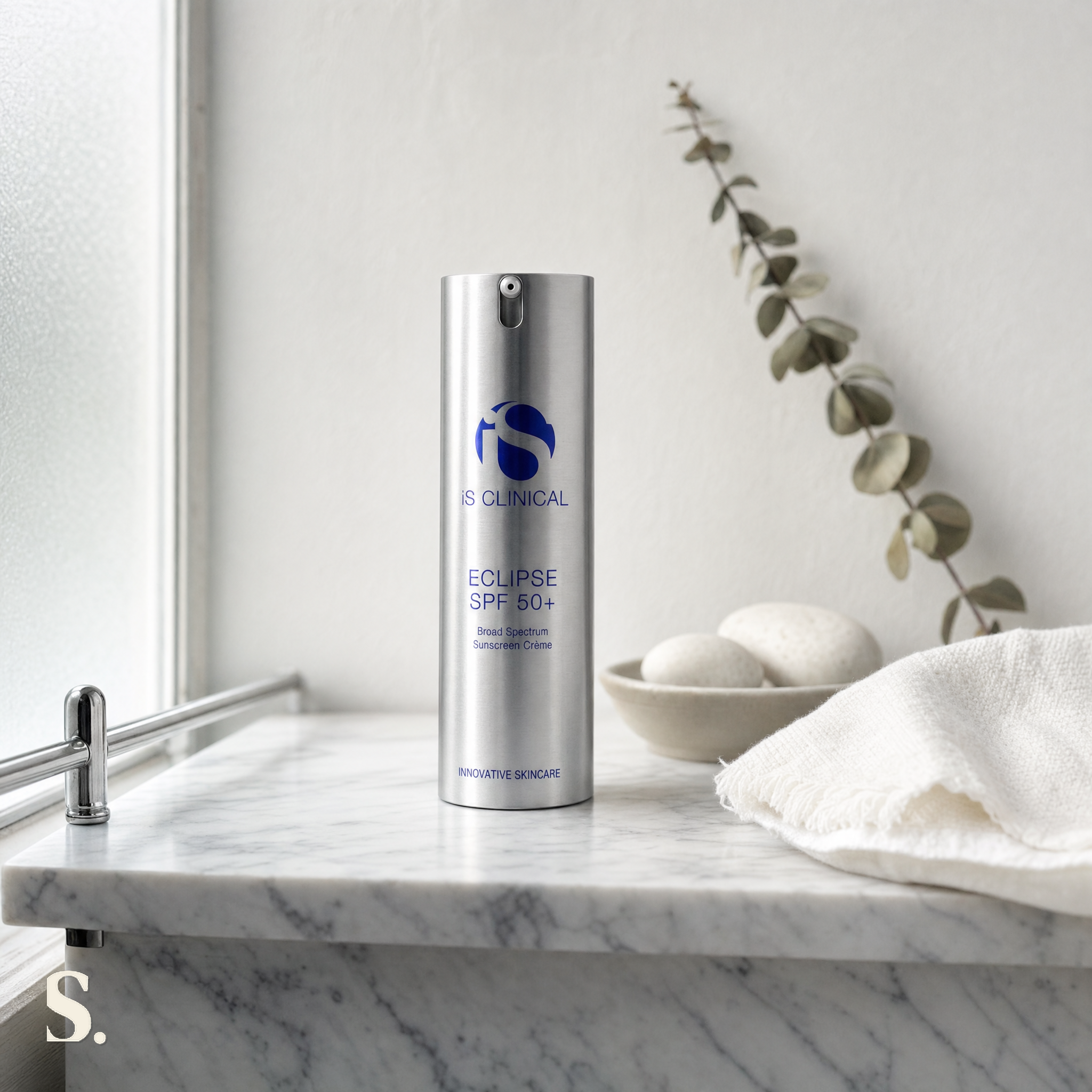
iS Clinical Eclipse SPF 50+ is an all-mineral sunscreen built on Titanium Dioxide (5.20%) and Zinc Oxide (1.10%), with no chemical UV filters in its stated active-ingredient list. It's broad-spectrum SPF 50+, water-resistant for 40 minutes, and formulated oil-free for an ultra-sheer, matte finish — the highest SPF number and the matte-focused option across iS Clinical's UK sunscreen range. It comes Translucent or in a single PerfecTint® Beige shade, in a 100g size.
What's in it
Active protection comes entirely from micronised Titanium Dioxide (5.20%) and Zinc Oxide (1.10%), both mineral (physical) UV filters — there's no octinoxate or other chemical filter listed, unlike iS Clinical's own Extreme Protect SPF 30. The formula also carries Vitamin E, an antioxidant included to help support the skin against everyday environmental stressors alongside the sun protection itself. The brand's own listing also describes long-term benefits around photoageing and skin firmness; we haven't repeated those wider claims here since no independent study data is provided — see the data gap below.
Texture, finish and shade
Eclipse SPF 50+ is formulated oil-free and applies as an ultra-sheer, lightweight fluid that absorbs quickly to a non-greasy, matte finish without a white cast, per the brand's own listing. It's non-comedogenic and water-resistant for up to 40 minutes during swimming or perspiration. Two options are available: Translucent (no visible tint) and PerfecTint® Beige, which adds a subtle tone-enhancing tint as you apply.
| Active filters | Titanium Dioxide 5.20%, Zinc Oxide 1.10% (all-mineral, no chemical filters) |
|---|---|
| SPF / protection | SPF 50+, broad-spectrum UVA/UVB |
| Water resistance | 40 minutes |
| Finish | Oil-free, ultra-sheer, matte, non-comedogenic |
| Shades | Translucent, PerfecTint® Beige |
| Size | 100g |
How it compares to Extreme Protect SPF 40
Both Eclipse SPF 50+ and Extreme Protect SPF 40 are confirmed all-mineral, using zinc oxide and titanium dioxide with no chemical filters — the difference is texture and finish rather than filter type. Eclipse is the lighter, oil-free, matte option with the highest SPF number in the range; Extreme Protect SPF 40 applies as a richer cream that sets to a sheer finish and offers a wider shade choice (Translucent, PerfecTint® Beige and PerfecTint® Bronze). If oily or combination skin, or a fully matte everyday finish, is the priority, Eclipse is the one to reach for. For the fastest-absorbing texture in the range at the cost of mineral-only status, Extreme Protect SPF 30 is the hybrid alternative worth reading about.
Who it suits
This is a good fit for oily, combination or acne-prone skin wanting a genuinely matte, non-greasy everyday SPF, and for anyone specifically choosing a mineral-only formula over a chemical one. If you'd rather have a richer texture with more shade options, the Extreme Protect SPF 40 review covers that alternative. Daily SPF is also the non-negotiable partner step for any brightening or vitamin C treatment — our Best iS Clinical Products for Hyperpigmentation & Uneven Tone guide covers that pairing. For how all four iS Clinical sunscreens compare side by side, see our Best iS Clinical Sunscreens: Mineral vs Hybrid SPF Compared guide.
Understanding mineral (physical) sunscreens
Titanium dioxide and zinc oxide sit on the skin's surface and reflect UV radiation, rather than absorbing and converting it the way chemical filters do — a distinction that matters if you're specifically avoiding chemical UV filters. For a fuller explanation of how mineral filters work, see our Titanium Dioxide glossary entry.
Pregnancy and breastfeeding
If you're pregnant or breastfeeding, please contact our team for advice before use.
Our approach
The active filters, finish and shade details above are drawn from this product's live Shopify listing. We haven't repeated the brand's own broader claims around long-term photoageing protection, since we can't independently verify the underlying study data behind those specific statements — see the data gap below. We don't run star ratings on this page; it's an independent breakdown to help you decide if this is the right sunscreen for you, not a review-platform score.