
iS Clinical Extreme Protect SPF 40 Review
The Verdict
Extreme Protect SPF 40 is a solid pick if you want a confirmed 100% mineral sunscreen with shade options and don't mind a richer, more substantial texture than a fluid gel. It's not the right pick if you want the lightest, fastest-absorbing finish in the range — see the Extreme Protect SPF 30 review for that alternative, though note SPF 30 trades mineral-only status for a chemical filter to get there.

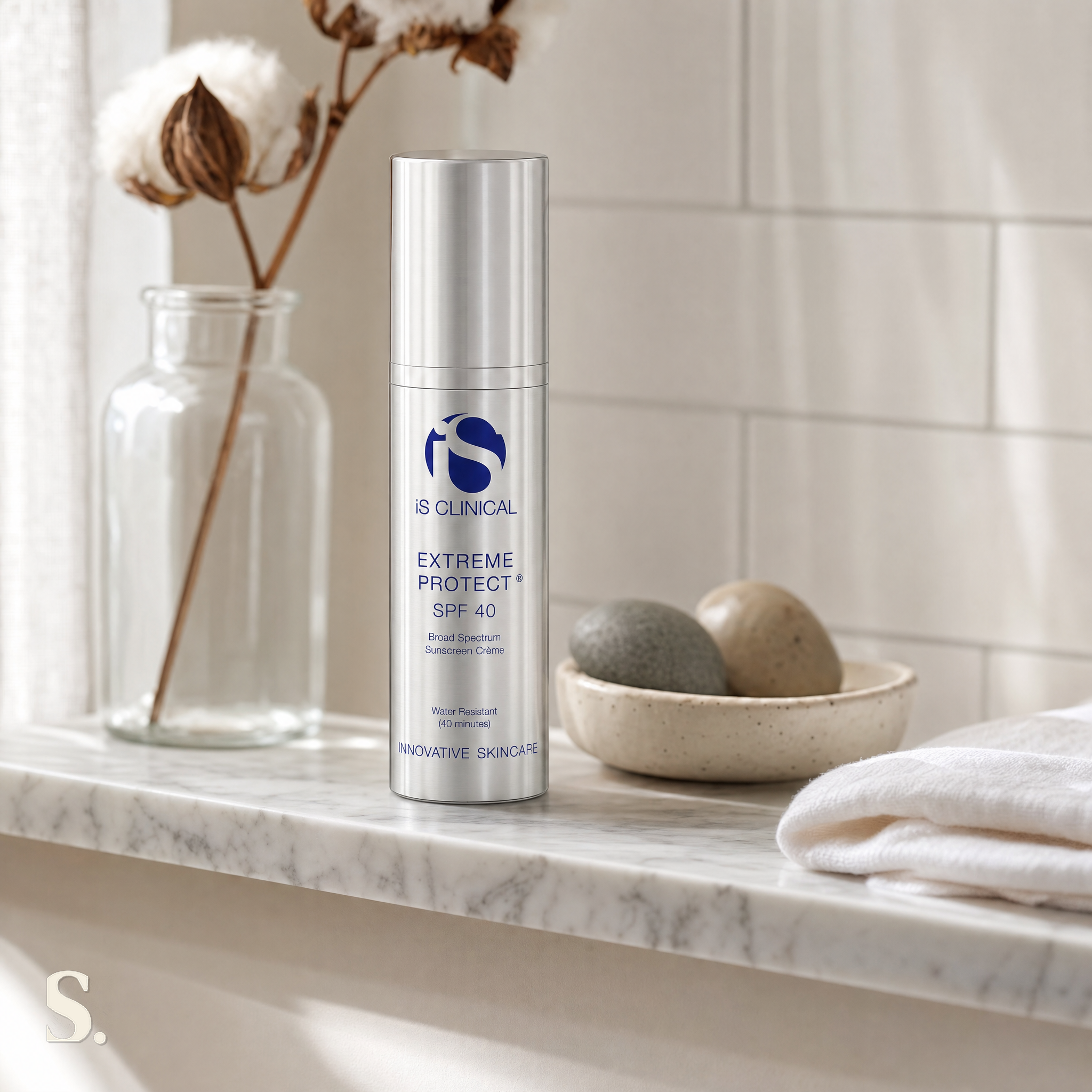
iS Clinical Extreme Protect SPF 40 is a 100% mineral sunscreen built on Zinc Oxide 15.3% and Titanium Dioxide 1.3%, with no chemical UV filters. It's a broad-spectrum SPF 40, water-resistant for 40 minutes, and comes in three finishes — Translucent, PerfecTint® Beige and PerfecTint® Bronze — the widest shade choice in iS Clinical's sunscreen range, suiting anyone wanting mineral-only protection with light coverage built in.
What's in it
The formula's active protection comes entirely from Zinc Oxide (15.3%) and Titanium Dioxide (1.3%), both micronised mineral (physical) UV filters — there's no octinoxate or other chemical filter in this product, unlike iS Clinical's own Extreme Protect SPF 30. Supporting ingredients include the brand's Extremozyme® antioxidant complex, alongside Centella Asiatica Extract, Vitamin E and Aloe Vera, aimed at a soothing, hydrating finish rather than pure sun-blocking. The brand's own listing also states the formula may help improve the appearance of visible redness immediately after application, though we haven't repeated its wider DNA-repair and skin-cancer-prevention claims here — see the data gap below.
Texture, finish and shades
It applies as a richer, creamier formula than a typical fluid SPF, and sets down to a sheer finish once blended in. Three options are available: Translucent (no visible tint, layers under make-up), PerfecTint® Beige and PerfecTint® Bronze (both giving light, sheer coverage as you apply). It's water-resistant for 40 minutes and sold in a 100g size.
| Active filters | Zinc Oxide 15.3%, Titanium Dioxide 1.3% (100% mineral, no chemical filters) |
|---|---|
| SPF / protection | SPF 40, broad-spectrum UVA/UVB |
| Water resistance | 40 minutes |
| Shades | Translucent, PerfecTint® Beige, PerfecTint® Bronze |
| Size | 100g |
| Suitable for | All skin types, including sensitive, photoaged and pre/post-procedure skin, per the brand's own listing |
Mineral vs hybrid: how it compares to SPF 30
The single most useful fact when choosing between iS Clinical's two Extreme Protect sunscreens is filter type, not just the SPF number. Extreme Protect SPF 40 is confirmed 100% mineral — zinc oxide and titanium dioxide only. Extreme Protect SPF 30, by contrast, is a hybrid formula that pairs zinc oxide with octinoxate, a chemical UV filter, in exchange for a lighter, faster-absorbing texture. If you're specifically choosing a mineral-only sunscreen — for sensitive skin, post-procedure care, or personal preference — SPF 40 is the one to pick over SPF 30. If the fastest-absorbing, most invisible finish matters more to you than filter type, SPF 30 is worth reading about instead. For the highest SPF number in the range, also all-mineral, see our Eclipse SPF 50+ review.
Who it suits
This is a good fit if you want confirmed mineral-only protection with a choice of tint, and don't mind a richer starting texture than a lightweight fluid. If you'd rather have the lightest, most invisible everyday feel and are comfortable with a chemical filter alongside zinc oxide, the Extreme Protect SPF 30 review covers that alternative. Daily SPF is also the non-negotiable partner step for any brightening or vitamin C treatment — our Best iS Clinical Products for Hyperpigmentation & Uneven Tone guide covers that pairing. For how all four iS Clinical sunscreens compare side by side, see our Best iS Clinical Sunscreens: Mineral vs Hybrid SPF Compared guide.
Understanding mineral (physical) sunscreens
Zinc oxide and titanium dioxide sit on the skin's surface and reflect UV radiation, rather than absorbing and converting it the way chemical filters do. For a fuller explanation of how mineral filters work and how they differ from chemical UV filters, see our Zinc Oxide glossary entry.
Pregnancy and breastfeeding
If you're pregnant or breastfeeding, please contact our team for advice before use.
Our approach
The active filters, shade options and texture details above are drawn from this product's live Shopify listing. We haven't repeated the brand's own claims around clinically proven DNA repair or reduced skin cancer risk, since we can't independently verify the underlying study data behind those specific claims — see the data gap below. We don't run star ratings on this page; it's an independent breakdown to help you decide if this is the right sunscreen for you, not a review-platform score.