
ALASTIN Regenerating Skin Nectar® Review: The Serum Practitioners Recommend Post-Procedure
The Verdict
Regenerating Skin Nectar is a specialist, procedure-focused serum rather than a general daily treatment — its water-free, silicone-based formula and arnica/squalane/vitamin E blend are built to sit comfortably on compromised post-procedure skin. At £180 for 29.6ml it's a considered purchase, and one best made alongside your practitioner's own aftercare directions rather than in place of them. Compare against INhance if your only need is post-injectable care, and against Restorative Skin Complex if you're really after a daily anti-ageing serum.

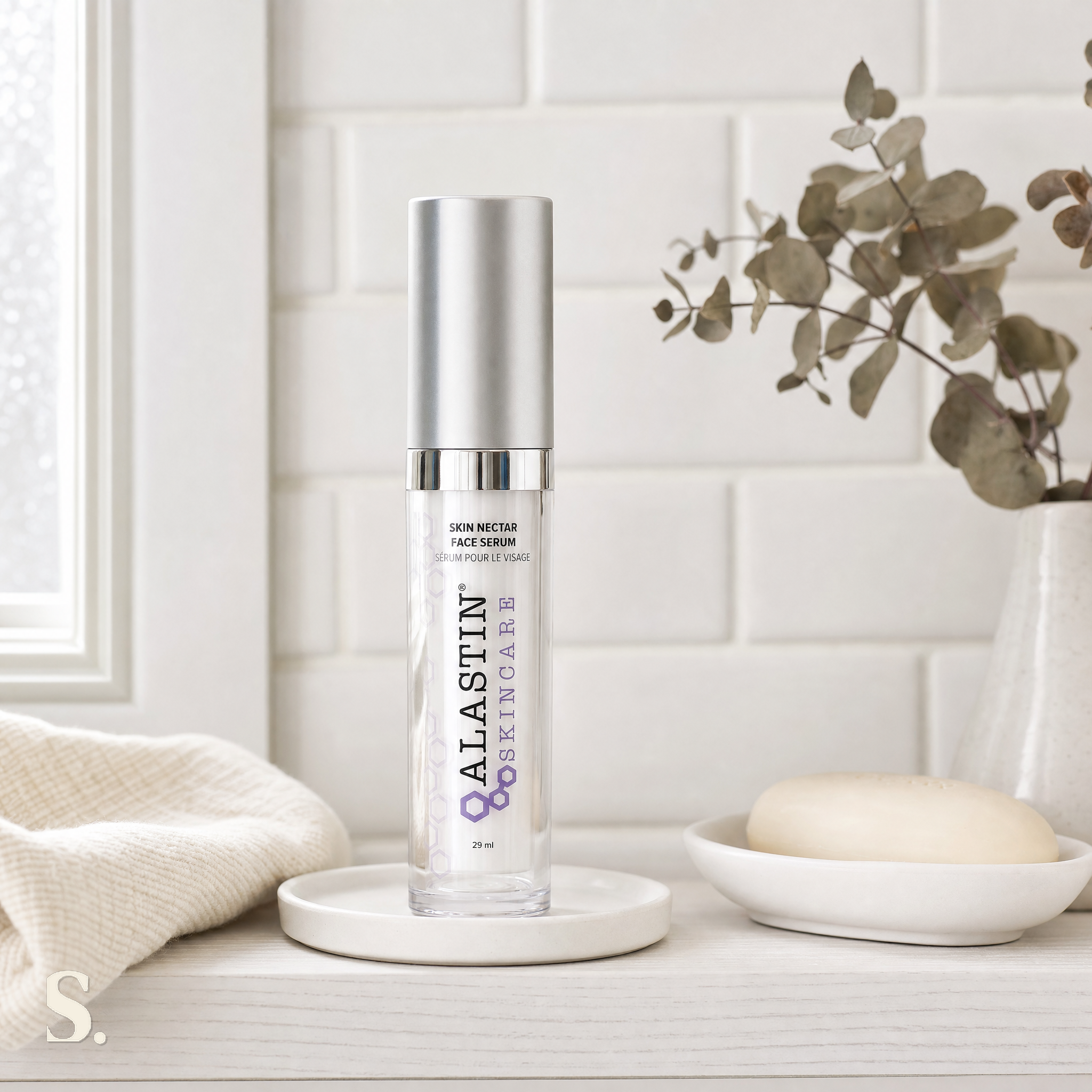
ALASTIN Regenerating Skin Nectar is a water-free, silicone-based serum built around the brand's TriHex Technology® peptide complex, designed for use before and after cosmetic procedures such as laser resurfacing, peels, microneedling and injectables. It costs £180 for 29.6ml, contains arnica, squalane and vitamin E, and some patients also use it long-term as a daily anti-ageing serum.
What is ALASTIN Regenerating Skin Nectar?
Regenerating Skin Nectar sits in ALASTIN's treatment-enhancing category — formulated to work alongside a cosmetic procedure rather than as a standalone daily active. It's water-free and preservative-free, built around TriHex Technology®, a blend of peptides (Palmitoyl Tripeptide-1 and Palmitoyl Hexapeptide-12) that ALASTIN says works with the skin's own processes to help clear damaged collagen and elastin, supporting the conditions for new collagen and elastin to form. ALASTIN also cites a study, published in the Journal of Cosmetic Dermatology, reporting that patients recovering from ablative laser resurfacing needed around half the usual downtime when using this serum as aftercare — a brand-reported finding rather than something Skintique has independently verified, so treat it as a starting point for a conversation with your practitioner rather than a guarantee.
Quick facts
| Detail | Regenerating Skin Nectar |
|---|---|
| Brand | ALASTIN |
| Product type | Treatment-enhancing serum |
| Format | 29.6ml / 1.0 fl oz pump bottle (around two months at one pump twice daily, per the brand) |
| Key ingredients | Arnica, Squalane, Vitamin E, Naringenin, Phospholipids/Phosphatidylserine |
| Texture | Silky, silicone-based, lightweight, water-free |
| Fragrance | Not confirmed fragrance-free by the brand |
| Skin types | All skin types, including sensitive and mature skin |
| Suggested use | Twice daily as a guide; procedure-care usage should always follow your practitioner's directions |
| Price band | Premium — see current price on the product page |
ALASTIN lists this formula as water-free, preservative-free, paraben-free, cruelty-free and gluten-free. Fragrance-free isn't part of that published list, so we can't confirm it either way — check with our team first if fragrance sensitivity is a concern.
Key ingredients
- Arnica — included to help calm and soothe the appearance of skin that's compromised or inflamed following a procedure.
- Squalane — a lightweight, skin-identical emollient that supports the skin's barrier without adding heaviness to the silicone base.
- Vitamin E (Tocopherol) — an antioxidant commonly included to help protect skin during the post-procedure period.
- Naringenin — a plant-derived antioxidant compound included alongside arnica for its calming profile.
- Phospholipids and Phosphatidylserine — structural lipid ingredients that help form the serum's protective, water-free base.
Texture and who it suits
Being silicone-based rather than water-based, Regenerating Skin Nectar has a silky, slippery glide that sits over the skin rather than sinking in the way a water-based serum would — a deliberate choice, since a water-free formula avoids water-loving preservatives on skin that may be freshly treated. It's suited to all skin types, including sensitive and mature skin, and works best for anyone preparing for or recovering from a procedure such as laser resurfacing, a peel, microneedling or an injectable treatment. It's less suited to anyone wanting only a budget everyday serum — at £180 for the smallest format in the range, tied with Restorative Skin Complex, it's a premium, procedure-oriented purchase.
Regenerating Skin Nectar vs INhance vs Restorative Skin Complex
Three ALASTIN products get mixed up regularly, usually on name or price alone. vs INhance Post-Injection Serum: INhance is specifically for the injectable-treatment area, applied with a cooling applicator tip up to four times a day for around ten days, while Regenerating Skin Nectar covers a broader range of procedures and is used twice daily — see our full Alastin INhance vs Regenerating Skin Nectar comparison. vs Restorative Skin Complex: the two are easy to confuse simply because they're both £180, but Restorative Skin Complex is a daily anti-ageing face serum for ongoing use, while Regenerating Skin Nectar is built around procedure support. For the full post-procedure line-up, see our guide to the best Alastin products for before and after a cosmetic procedure.
Using it alongside HA IMMERSE Serum
HA IMMERSE Serum is ALASTIN's hyaluronic-acid hydrating serum, with brand guidance to use it every two to three hours during the first 48 hours after a procedure. Regenerating Skin Nectar sits in the same window and is formulated to be layered alongside it — HA IMMERSE for hydration, Regenerating Skin Nectar applied after other actives to help seal them in. Always follow your own practitioner's protocol for timing rather than generic advice.
How to use Regenerating Skin Nectar
- Cleanse gently, particularly important on freshly treated skin.
- Apply last in your routine, after any other approved actives, so its silicone base can help seal them in.
- Use twice daily as a general guide, though the brand notes procedure-care frequency can vary — always follow your healthcare provider's directions for the days immediately after treatment.
If you're pregnant or breastfeeding
If you're pregnant or breastfeeding, please contact our team for advice before use.
Verdict
Regenerating Skin Nectar is a specialist, procedure-focused serum rather than a general daily treatment — its water-free, silicone-based formula and arnica/squalane/vitamin E blend are built to sit comfortably on compromised post-procedure skin. At £180 for 29.6ml it's a considered purchase, best made alongside your practitioner's own aftercare directions rather than in place of them. Compare against INhance if your only need is post-injectable care, and against Restorative Skin Complex if you're really after a daily anti-ageing serum.
Frequently asked questions
What is Alastin Regenerating Skin Nectar for?
It's a treatment-enhancing serum formulated for use before and after cosmetic procedures such as laser resurfacing, chemical peels, microneedling and injectables, helping to calm and support skin during recovery. Some patients also use it as a general anti-ageing serum, per the brand's own positioning.
Is Alastin Regenerating Skin Nectar the same as INhance?
No. INhance is specifically for the area treated with fillers or other injectables, using a cooling applicator tip for a short, intensive course. Regenerating Skin Nectar covers a wider range of procedures and is used twice daily. See our full comparison for details.
Can I use Regenerating Skin Nectar every day?
Yes — ALASTIN's own positioning allows for ongoing daily use as a general serum. In the days immediately following a procedure, always follow your practitioner's specific directions on frequency rather than a generic daily routine.
How long does a bottle of Alastin Regenerating Skin Nectar last?
At one pump used twice daily, the brand estimates a 29.6ml bottle lasts around two months, though this varies with how much product you use per application.
Is Alastin Regenerating Skin Nectar fragrance-free?
ALASTIN's published free-from claims cover water-free, preservative-free, paraben-free, cruelty-free and gluten-free — fragrance-free isn't explicitly listed, so we can't confirm it either way. Get in touch with our team first if fragrance sensitivity is a concern.