
AlumierMD Enzymatic Peel Review
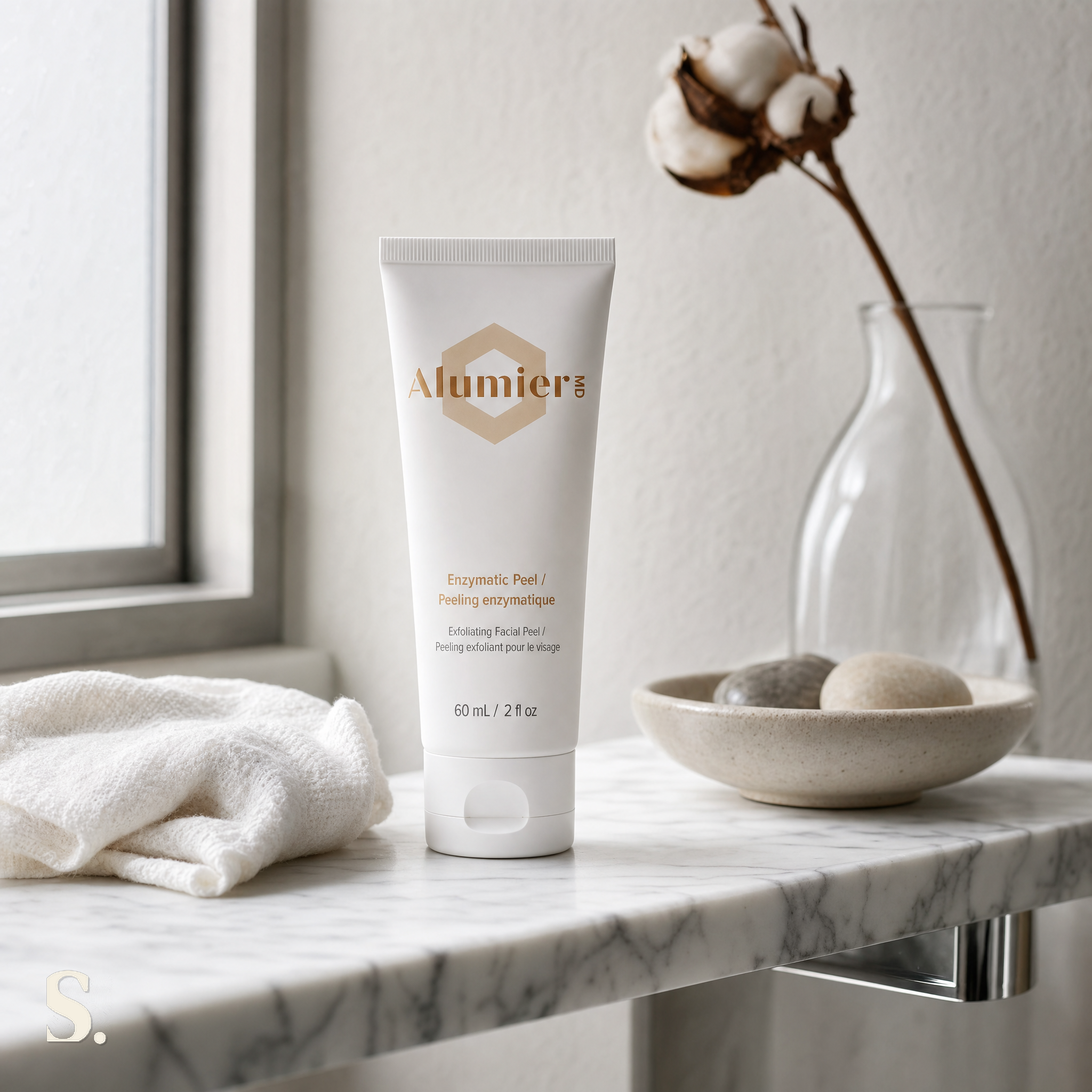
The Verdict
Enzymatic Peel earns its place as AlumierMD's enzyme-led exfoliating option: 10% lactic acid does the chemical work, bromelain and papain add enzymatic exfoliation on top, and aloe vera and sodium hyaluronate are there specifically to stop the process feeling harsh. It's positioned as suitable across the broadest skin-type range of AlumierMD's masks, sensitive skin included — but that breadth doesn't extend to the sun-sensitivity caution, which applies to everyone, every time. Treat the SPF-and-sun-avoidance guidance as non-negotiable rather than optional, and this is a straightforward, low-fuss way to add enzyme exfoliation into a weekly routine.

AlumierMD Enzymatic Peel is a rinse-off exfoliating treatment that pairs 10% lactic acid with fruit enzymes bromelain and papain, plus soothing aloe vera and hydrating sodium hyaluronate. Left on for a few minutes then rinsed away, it's positioned as a gentler alternative to at-home microdermabrasion — but it carries the same sun-sensitivity caution as any AHA exfoliant.
What is AlumierMD Enzymatic Peel?
Enzymatic Peel is AlumierMD's fruit-enzyme exfoliating mask, built around 10% lactic acid alongside two protein-digesting enzymes — bromelain (from pineapple) and papain (from papaya). Together they work on the surface layer of dead skin cells, while aloe vera extract and sodium hyaluronate are included to calm and hydrate skin during the process. AlumierMD positions it to help improve the appearance of fine lines, wrinkles and skin discolouration, and to support skin texture and clarity with consistent use. It sits in AlumierMD's Masks category and is rinsed off rather than left on overnight.
Key ingredients
| Ingredient | What it's there for |
|---|---|
| Lactic Acid (10%) | AHA exfoliant that loosens the bonds between dead skin cells |
| Bromelain | Fruit enzyme, from pineapple, that helps break down surface dead skin |
| Papain | Fruit enzyme, from papaya, working alongside bromelain for enzymatic exfoliation |
| Aloe Vera Extract | Included to soothe and calm skin during exfoliation |
| Sodium Hyaluronate | Hydrating ingredient that helps offset dryness from exfoliation |
How to use it
- Apply: to cleansed, dry skin, avoiding the eye area.
- Leave on: around 5–10 minutes, then rinse thoroughly with lukewarm water.
- Frequency: 1–2 times a week — this is an exfoliating treatment, not a daily-use product.
- Timing: can be used AM or PM, but see the sun-sensitivity note below before choosing when.
- Patch test: not explicitly required by AlumierMD, but we'd recommend a 48-hour patch test given the combined AHA and enzyme content, particularly if you're new to chemical exfoliation.
Sun sensitivity — read this before you start
AlumierMD carries an explicit sunburn-alert caution on Enzymatic Peel, in line with standard AHA labelling: lactic acid exfoliation can increase skin's sensitivity to the sun. Daily broad-spectrum SPF and limiting direct sun exposure are advised while using this product and for around a week afterwards. This applies every time you use it, not just the first few applications.
Who it's suitable for
AlumierMD lists Enzymatic Peel as suitable across the broadest range of skin types in its Masks category — acne-prone, dry, oily, combination, mature, normal and sensitive skin. If you have a diagnosed inflammatory condition such as rosacea or eczema, or you're combining it with other exfoliating actives, we'd recommend a conversation with our team or your GP/dermatologist before adding it to your routine, rather than assuming it will suit you based on a review.
Pregnancy and breastfeeding
If you're pregnant or breastfeeding, please contact our team for advice before use.
Ingredients and allergens
The full INCI list is on the product page. If you know you react to a particular ingredient, patch test on your inner arm and wait 24 hours before applying to your face, per AlumierMD's own guidance.
Enzymatic Peel vs MicroDerm Polish vs Refining Clay Mask
AlumierMD runs three exfoliating mask-format treatments, and it's easy to reach for the wrong one. MicroDerm Polish is a physical scrub using hydrated silica particles — no acids or enzymes, just manual buffing. Enzymatic Peel is chemical and enzymatic rather than physical: lactic acid plus bromelain and papain, rinsed off after a few minutes rather than massaged in. Refining Clay Mask goes further again, combining bentonite and kaolin clays with the same lactic-acid-and-enzyme combination for a deeper, pore-focused mask, left on for a shorter 3–5 minutes. If you want enzyme-led exfoliation without any physical buffing, Enzymatic Peel is the one built for that.
Our verdict
Enzymatic Peel earns its place as AlumierMD's enzyme-led exfoliating option: 10% lactic acid does the chemical work, bromelain and papain add enzymatic exfoliation on top, and aloe vera and sodium hyaluronate are there specifically to stop the process feeling harsh. It's positioned as suitable across the broadest skin-type range of AlumierMD's masks, sensitive skin included — but that breadth doesn't extend to the sun-sensitivity caution, which applies to everyone, every time. Treat the SPF-and-sun-avoidance guidance as non-negotiable rather than optional, and this is a straightforward, low-fuss way to add enzyme exfoliation into a weekly routine.
FAQs
How long do you leave AlumierMD Enzymatic Peel on?
Around 5–10 minutes, applied to cleansed, dry skin and then rinsed off thoroughly with lukewarm water. It's a rinse-off treatment rather than a leave-on product, so don't leave it on longer expecting a stronger effect — that's more likely to cause irritation than better results.
Does Enzymatic Peel increase sun sensitivity?
Yes. AlumierMD carries an explicit sunburn-alert caution on this product because of its lactic acid content — daily broad-spectrum SPF and limiting direct sun exposure are advised while using it and for around a week after each use.
How often should I use AlumierMD Enzymatic Peel?
AlumierMD recommends 1–2 times a week. It's an exfoliating treatment rather than a daily-use product, so using it more often than that risks over-exfoliating rather than improving results any faster.
Is Enzymatic Peel gentler than MicroDerm Polish?
They work differently rather than one being simply gentler. MicroDerm Polish exfoliates physically, with manual buffing from silica particles, while Enzymatic Peel works chemically and enzymatically via lactic acid, bromelain and papain, with no scrubbing involved. Which suits you better depends on how your skin responds to physical friction versus acids.
Can I use Enzymatic Peel and a retinol in the same week?
AlumierMD doesn't publish a blanket rule on this combination on the product page, and combining exfoliating acids with retinol can increase irritation for some skin types. We'd recommend spacing the two out across the week rather than using them on the same night, and asking our team if you're unsure how your specific routine should be sequenced.
Is AlumierMD Enzymatic Peel suitable for sensitive skin?
AlumierMD lists sensitive skin among the types Enzymatic Peel is suitable for. That said, any AHA-and-enzyme combination can still cause tingling or redness on reactive skin, so we'd suggest patch testing first and starting with a shorter leave-on time within the 5–10 minute range.