
iS Clinical Active Serum Review
The Verdict
A treatment-strength multi-acid exfoliant, not a vitamin C serum. Best suited to those wanting a dedicated resurfacing step 2-3 evenings a week, introduced gradually and paired with daily SPF.

What is iS Clinical Active Serum?
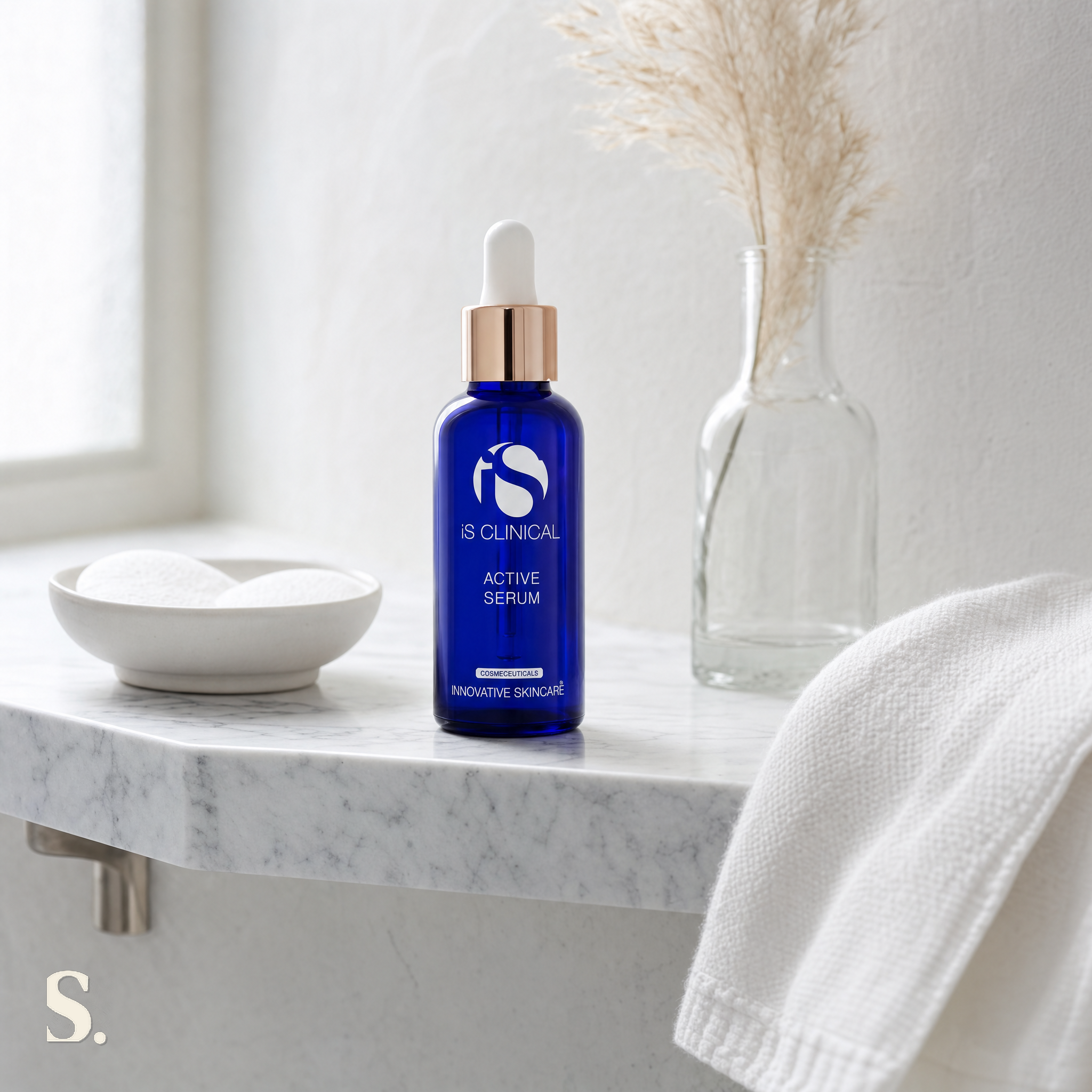
iS Clinical Active Serum is the brand's original resurfacing treatment and its longest-standing bestseller. Unlike the Super Serum Advance+ or Pro-Heal Serum Advance+, it is not a vitamin C serum — it's a multi-acid exfoliating formula built around Sugar Cane Extract (glycolic acid), Bilberry Fruit Extract (lactic acid), Willow Bark Extract (salicylic acid), Arbutin and Mushroom Extract (kojic acid). Together these ingredients are formulated to gently lift away dead skin cells, help clear congested pores and help improve the appearance of uneven tone, fine lines and post-breakout marks. The formula is lightweight, fragrance-free and designed to layer under a moisturiser or SPF once it has absorbed.
Key ingredients
| Ingredient | Type | What it's included for |
|---|---|---|
| Sugar Cane Extract | Glycolic acid (AHA) | Surface exfoliation, helps improve the appearance of texture |
| Bilberry Fruit Extract | Lactic acid (AHA) | Gentle exfoliation, supports smoother-feeling skin |
| Willow Bark Extract | Salicylic acid (BHA) | Pore-clearing, helps with congestion and blemish-prone skin |
| Arbutin | Brightening agent | Helps improve the appearance of uneven tone and dark marks |
| Mushroom Extract | Kojic acid | Works alongside arbutin on tone and brightness |
Who it's suitable for
Active Serum is aimed at people who want a treatment-strength exfoliant rather than a purely hydrating or brightening serum. It's commonly used by those dealing with:
- Rough texture, visible pores or a dull surface finish
- Occasional breakouts or congestion around the chin, nose and forehead
- Uneven tone and post-blemish marks left behind after spots have healed
- Early fine lines where a resurfacing step is wanted alongside a separate hydrating or vitamin C product
Because it combines several acids at once, it isn't usually the first active step for someone completely new to exfoliating acids or retinoids — easing in gradually matters more here than with a single-acid product.
Who might want to hold off, or check with a professional first
Very sensitive, broken or actively inflamed skin, and skin currently using a prescription retinoid or undergoing in-clinic peels or resurfacing treatments, generally isn't the ideal starting point for a multi-acid product like this. If you're unsure whether Active Serum fits alongside a current routine or a recent in-clinic treatment, it's worth checking with a skin professional before introducing it.
Active Serum vs a straightforward vitamin C serum
It's easy to assume any "treatment serum" from iS Clinical works the same way, but Active Serum and a vitamin C serum solve different problems. A vitamin C serum (like Super Serum Advance+ or Pro-Heal Serum Advance+) is primarily an antioxidant step — it helps defend skin against everyday environmental stress and supports a brighter-looking complexion over time, usually applied in the morning. Active Serum is an exfoliating treatment — it physically and chemically encourages surface skin cells to turn over, which is a different mechanism from antioxidant support. The two aren't interchangeable, and many routines use both: vitamin C in the morning, Active Serum on alternate evenings.
How to use iS Clinical Active Serum
Active Serum is a PM-only, 2–3 times a week product to start with — it isn't designed for twice-daily use. A typical routine looks like:
- Cleanse and dry skin thoroughly before application.
- Apply a thin layer to the face in the evening, 2–3 nights a week initially. A brief cooling, tingling sensation on application is expected with this formula and generally settles within a couple of minutes.
- Follow with a moisturiser once the serum has absorbed — this isn't a leave-it-bare product for most skin types.
- Build up frequency slowly if skin tolerates it well, rather than jumping straight to nightly use.
- Wear SPF every morning after an evening of acid exfoliation, as resurfaced skin can be more sensitive to UV.
- Avoid combining with other strong actives (retinoids, additional acid exfoliants) on the same night until you know how your skin responds.
A patch test on a small area 24–48 hours before full-face use is sensible for anyone with reactive or sensitised skin, or when introducing any new acid-based product for the first time.
What to expect
Because Active Serum combines several exfoliating acids, some tightness, mild flaking or increased sensitivity can occur while skin adjusts — this is a normal response to introducing a resurfacing product and usually settles as frequency is built up gradually. Many people find skin feels smoother and looks brighter with consistent use over the following weeks, though how quickly changes become visible varies from person to person and depends on skin type, starting condition and how often the product is used. If irritation, persistent redness or breakouts get worse rather than better, it's worth dropping back to once a week or pausing use and seeking advice.
Is it "purging" or is it irritation?
Any product that speeds up cell turnover can bring existing under-the-skin congestion to the surface faster than it would have appeared naturally — this is often described as purging, and it tends to show up in areas you already break out and settle down within a few weeks. Irritation, by contrast, tends to show up as widespread redness, stinging, or breakouts in areas you don't normally get them, and doesn't improve with continued use. If you can't tell the difference, easing off frequency and asking a skin professional is the safer route.
Layering and storage
Active Serum is generally applied after cleansing and before moisturiser, and shouldn't be layered under or over other strong acid or retinoid products on the same night. Keep the bottle away from direct sunlight and heat, and always replace the cap fully after use to protect the formula. As with most treatment serums, it's worth checking the batch or expiry information on your bottle and following the guidance on the packaging or insert for shelf life once opened.
iS Clinical Active Serum vs Pro-Heal Serum Advance+
Active Serum and Pro-Heal Serum Advance+ are often confused because both sit in the "treatment serum" part of the range, but they work differently. Active Serum is acid-led and resurfacing, aimed at texture, congestion and tone. Pro-Heal Serum Advance+ is a time-release vitamin C formula built for sensitive, reactive or inflamed skin that needs calming antioxidant support rather than exfoliation. For a full side-by-side breakdown of ingredients, skin types and when to choose one over the other, see the full Active Serum vs Pro-Heal Serum Advance+ comparison.
Where it sits in the iS Clinical range
Active Serum is one of several serums in the iS Clinical line-up, and it's worth knowing how it differs from the others before choosing where to start:
- Super Serum Advance+ — a 15% vitamin C and growth-factor serum focused on ageing and brightening, not exfoliation.
- Youth Serum — a peptide and growth-factor gel serum aimed at firmness and fine lines, with no acid exfoliation.
- The full iS Clinical brand guide — for an overview of how the whole range fits together.
Active Serum can be layered into a routine alongside these other serums (typically on different nights, or acids in the evening and vitamin C in the morning) rather than used as a replacement for them. For a wider view of anti-ageing options across the range, see our iS Clinical anti-ageing serums guide.
Ingredients glossary
Want more detail on the individual actives in this formula? See our glossary entries on glycolic acid, lactic acid, salicylic acid, arbutin and kojic acid.
Safety and patch testing
If you're pregnant or breastfeeding, please contact our team for advice before use. As with any multi-acid exfoliating product, introduce it gradually, patch test first if you have sensitive or reactive skin, and stop use if irritation persists. Daily SPF is recommended alongside any resurfacing treatment.